

NOV XX, 2026
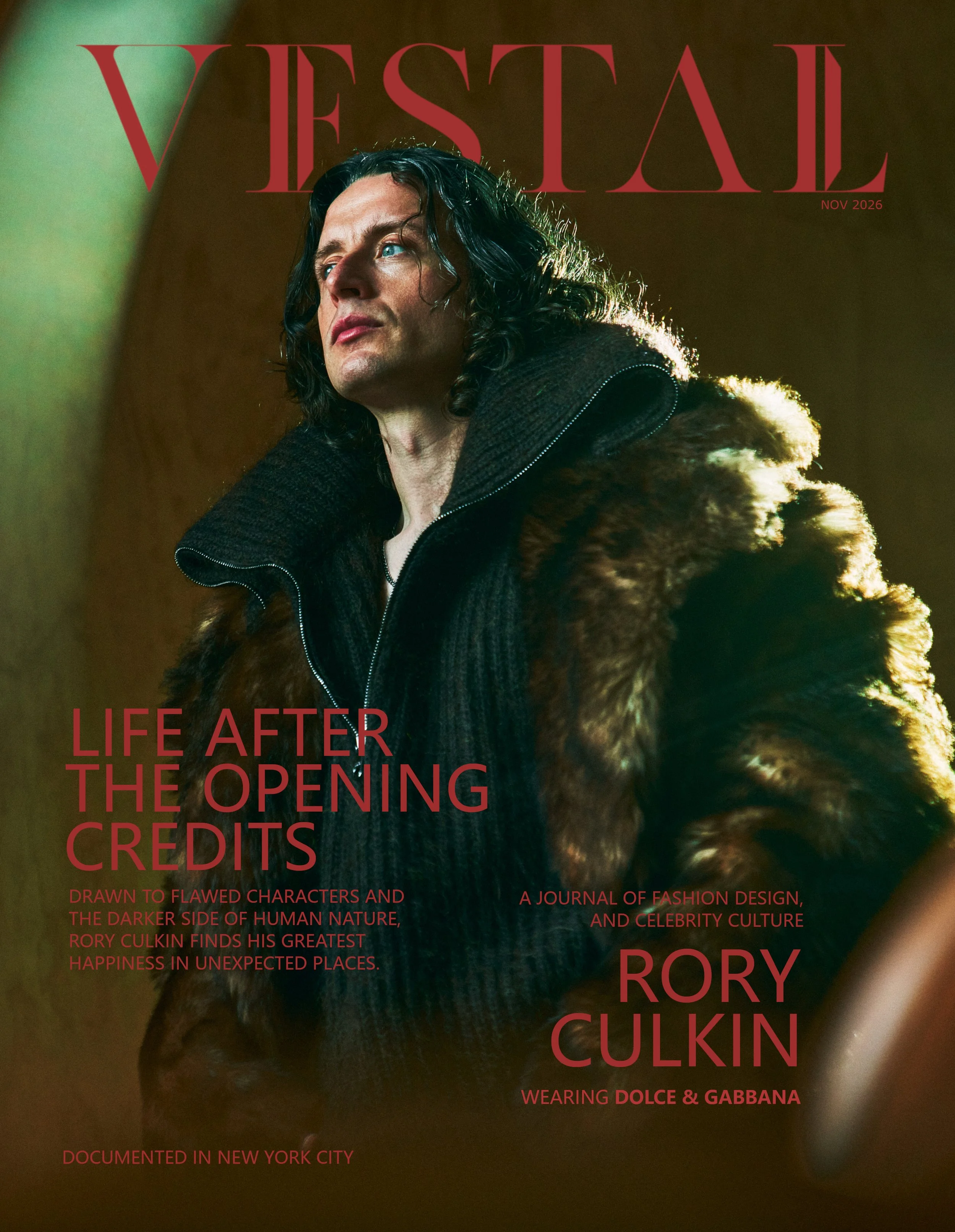
PHOTOGRAPHY GUY AROCH STYLING ODILE ITURRASPE INTERVIEW DAVID GARGIULO DOCUMENTED IN NEW YORK CIRY. Total look DOLCE & GABBANA.
LIFE AFTER THE OPENING CREDITS
For most of his life, Rory Culkin has been drawn to the darker corners of human nature. Across three decades of acting, he has gravitated toward characters who exist somewhere between vulnerability and uncertainty, whose intentions are rarely straightforward and whose understanding of the world is often as fractured as the worlds they inhabit.
He has never seemed particularly interested in easy answers, preferring instead to explore the contradictions, flaws, and uncomfortable truths that make people who they are.
But life has recently taken an unexpected turn. With the arrival of his daughter, Havoc, Culkin finds himself looking at everything that came before through an entirely different lens. He describes his life before fatherhood as a montage, the opening sequence of a film that was merely building toward its beginning. Now, with the opening credits behind him, the movie has finally started.
It's a striking way of looking at a life already shaped by cinema, and perhaps an indication of how profoundly fatherhood has altered his perspective. Yet the transformation hasn't necessarily changed the artist. If anything, Culkin feels more certain of the path he's been following, more comfortable embracing its darker territories, and more willing to trust his instincts. What emerges is a portrait of an actor who remains fascinated by the darkness in people, but who has found perhaps his greatest sense of clarity in something rather simple: being a father.
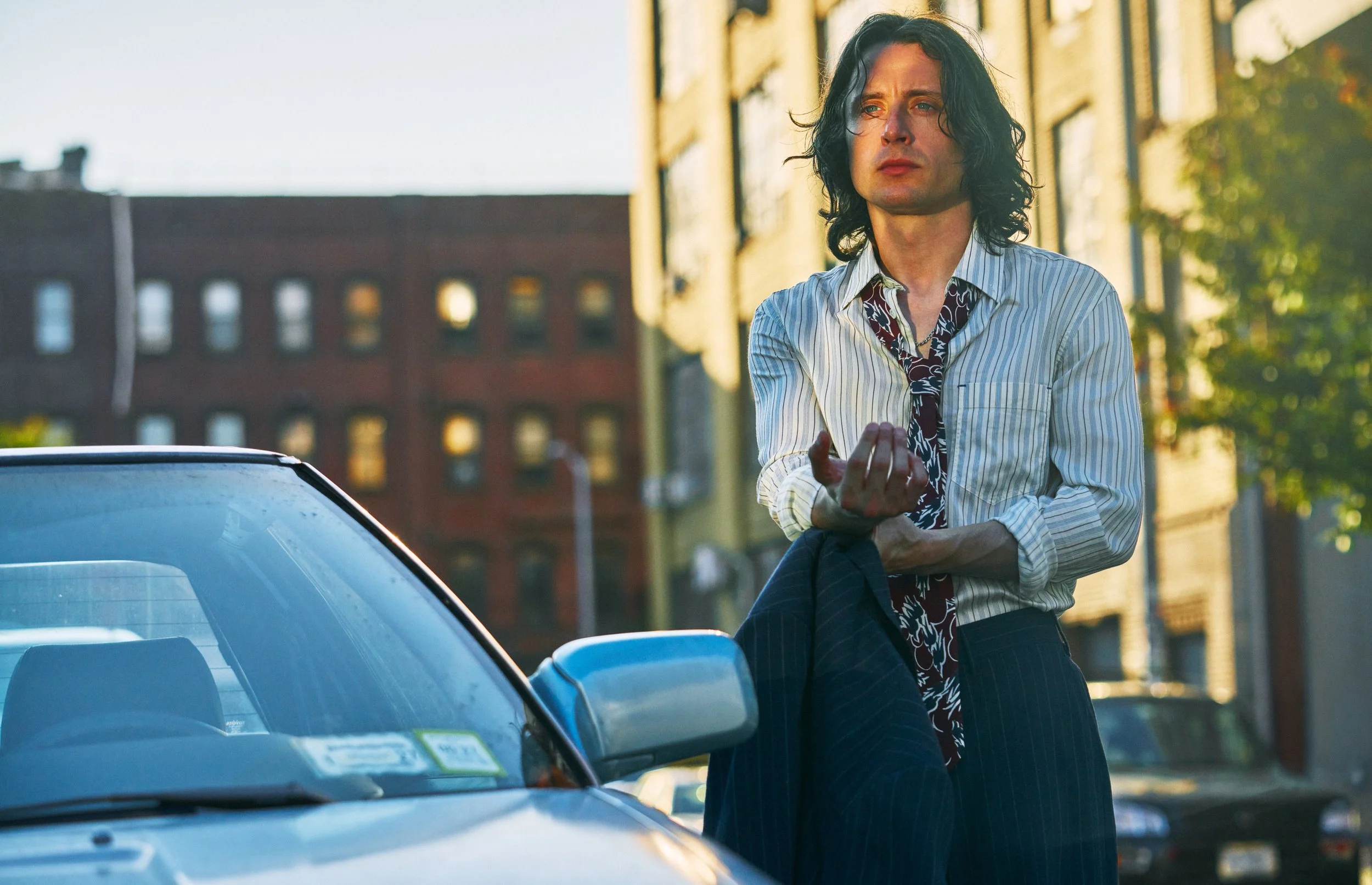
Total look PAUL SMITH COLLECTION.

INTERVIEW WITH RORY CULKIN
“ MY WHOLE LIFE WAS LEADING TO HAVOC, SO ANY MEMORY I HAVE IS JUST PRE-HAVOC TO ME. ”
— RORY CULKIN
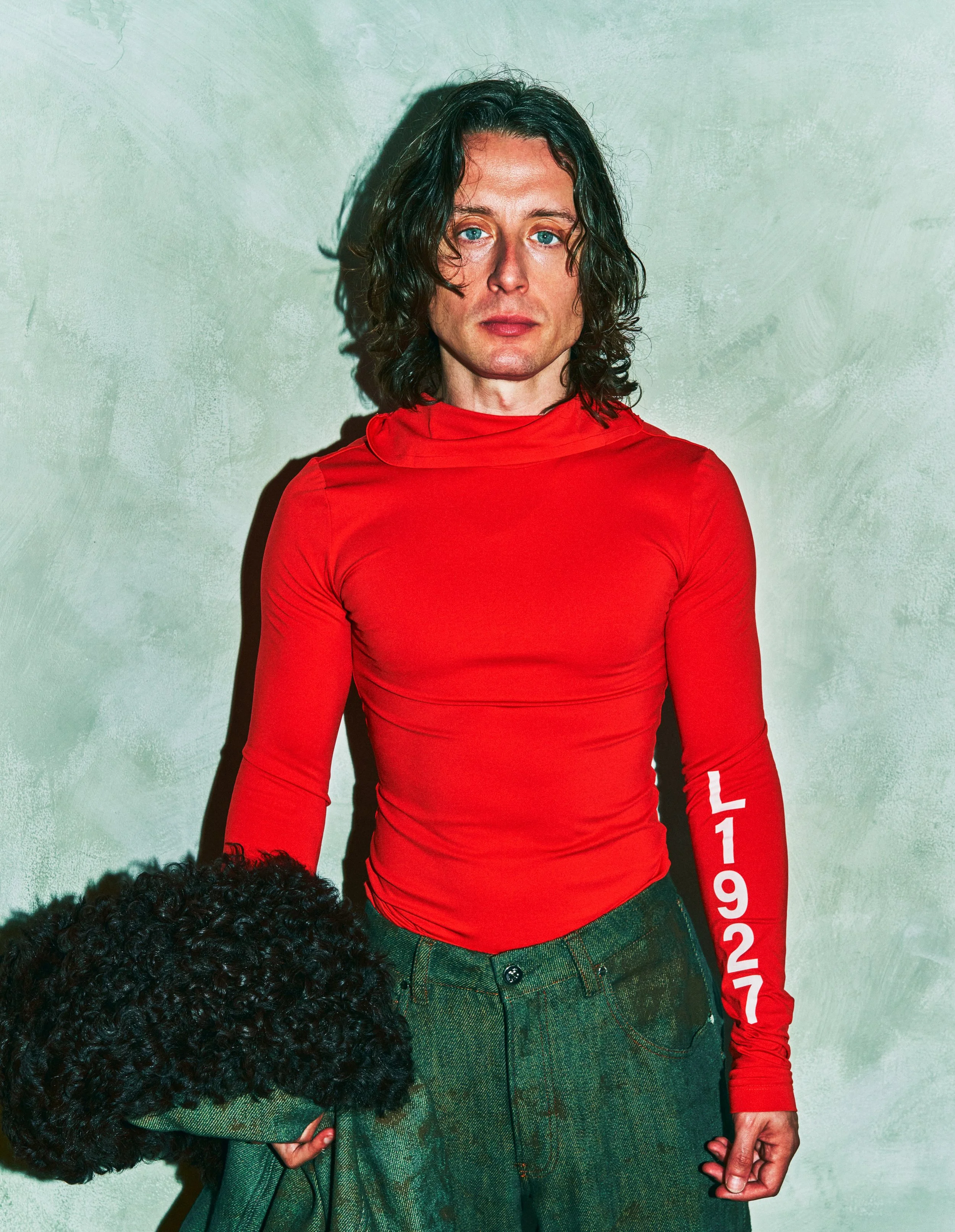
Shirt LACOSTE COLLECTION, pants, and jacket FERRARI.
David Gargiulo __ You've recently entered a completely new chapter of your life as a father. Has becoming a parent changed the way you look at your own childhood ?
Rory Culkin __ You do a lot of reflecting on your childhood once you have a kid. But now, when I look back at myself as a kid, I just see Havoc's dad as a kid. My whole life was leading to her, so any memory I have is just pre-Havoc to me. Her name is Havoc. It's like my whole life was a montage up until this point. It's weird, but it's all about her. Everything revolves around her now.
DG __ What do you mean when you say it was a montage?
RC __ In a way, it feels like life is just starting now. Everything was just a way to get to this moment, a way to get to Havoc. It feels like a montage. The first ten minutes of the movie were about my life previously, and now the movie has started. The opening credits have finished, and we're starting the movie.
DG __ Havoc is a very interesting name. How did you come up with it?
RC __ I just kind of threw it out there one day, and Kate liked it. I was throwing names out, and she surprisingly took to it. We were out to dinner, and when we came back home, somebody had spray-painted "Havoc" on a wall across the street from our apartment. It was new, too. I was like, "Well, look at that." That was kind of the final nail in the coffin, I guess. She was into it, so that was that.
DG __ Did becoming a parent change the kind of stories you want to tell or the projects you want to take on? You said everything before this was the setup. What about the future?
RC __ If anything, being a father has made what I'm already doing clearer to me. I feel more sure of myself, I guess, because I have to be with her. And I think that translates into my work. Kate was pregnant with Havoc when we were filming Nocturne, which is out now, and that's when I started to turn a corner mentally. I think I'm just more sure of myself and my approach. I'm more relaxed with the process and just calmer.
DG __ But has it changed the kinds of stories you're drawn to, or are you still happy exploring the territory you've been working in?
RC __ I've always been drawn to darker stories, and if anything, I want to keep going further down that path. Maybe once she's running around and talking, I'll feel the need to make something for her, something for children, which I've never really done. Even when I was a child actor, that was my rule. I said, "I don't want to make movies for kids. I want to make movies that adults watch." That's why I did You Can Count on Me and a lot of independent movies. I was drawn to films like Mean Creek. I never wanted to do a kids' show or a kids' movie. So maybe that'll change once she's running around. But right now, like I said, I'm more sure of myself and the path I've been taking. I just want to go deeper into it. I've had her on sets. She's visited two of my sets so far, and one was a real horror movie. Funny story: there was this person in makeup and prosthetics who looked really terrifying. I can't really say what the project is, but I wanted to see how the baby would react. She just smiled at the woman, who was looking terrifying. If anything, it made me think, "Oh yeah, I think it's cool that her dad does some weird, spooky stuff."
DG __ As they say like father, like daughter? [laughs]
RC __ Yeah. Hopefully she takes to these kinds of weird stories, too. [laughs]
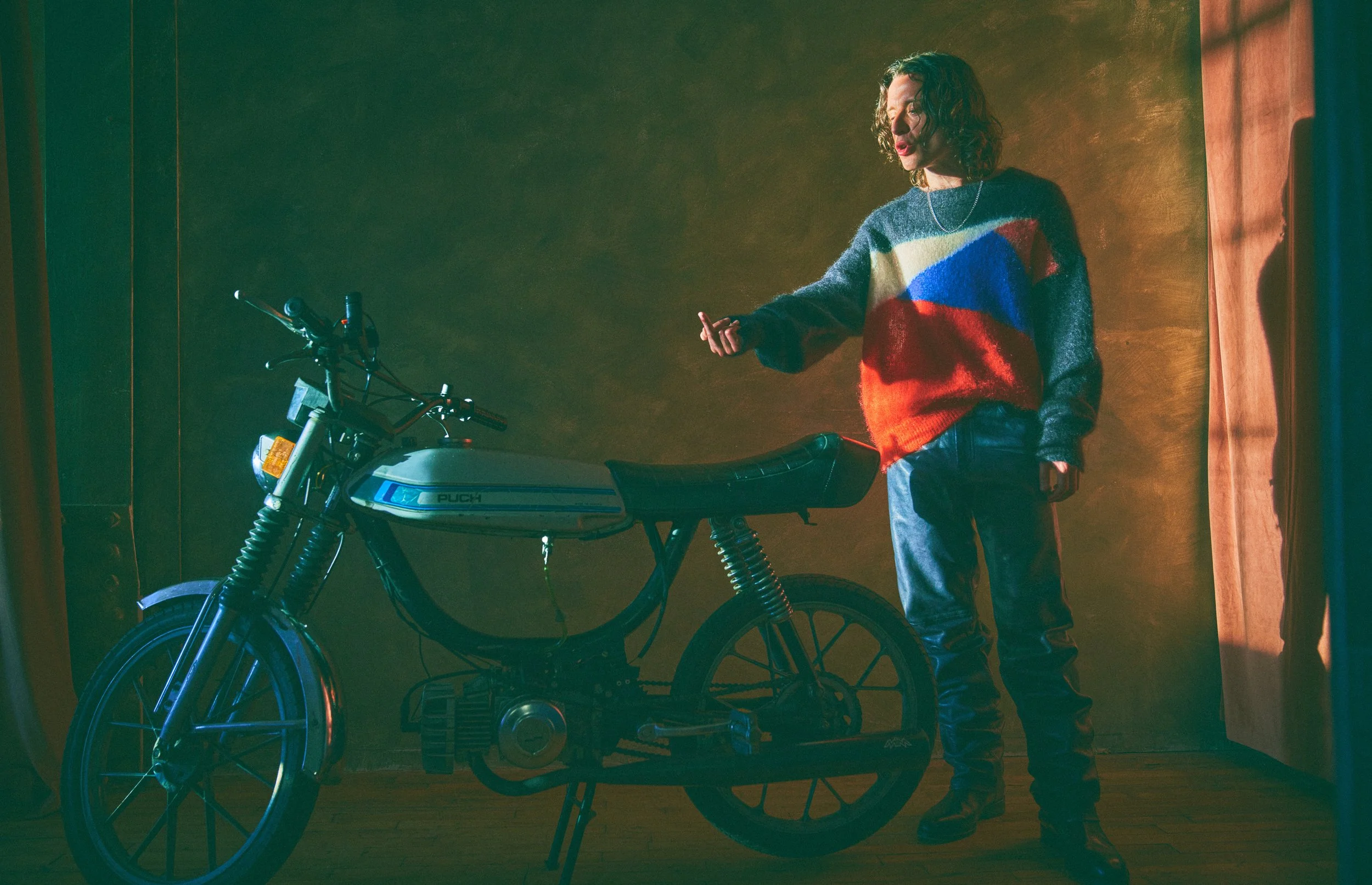
Pants and sweater ISABEL MARANT, boots PAUL SMITH.
“ EVEN IF THE METAPHORICAL ASTEROID HITS, DO I WANT TO BE HIDING UNDER A TABLE, OR DO I WANT TO BE BATHING MY CHILD? I WANT TO BE BATHING MY CHILD. ”
— RORY CULKIN
DG __ You often portray characters who struggle to understand the world around them. Do you consider yourself someone who tries to make sense of the world, or have you become more comfortable accepting that some things simply are the way they are and don't necessarily need an explanation?
RC __ I've always been someone who doesn't panic or overthink things. I have a lot of friends with phobias and fears, and I've just never really understood that kind of panic. And I know a lot of actors think it's really important to understand your motivation in a scene, or the character's motivation, all the time. And that's mostly true, but I'm also starting to realize that maybe you don't always need to. In real life, you don't constantly think about your motivations. When Rory walks into a room, I'm not always thinking, "What's my motivation here? What do I want from this interaction?" Why would I think that when I'm portraying a human being? Real people don't always think about their motivations. So, yeah, I guess I'm just a little more easygoing about everything. About life.
DG __ That’s so interesting. Thinking about it you’re right. We, as you said, don't always have a clear motivation for everything we do. We don’t always think "I'm going to do this because I have this final goal in mind," that's not necessarily what's going through our head every time we walk into a room. Oh, I think I heard the baby.
RC __ Yeah. She's up. Maybe she'll go back to sleep. I can still do the interview if I just bring her out and keep her in my arms. Give me one minute.
[Rory steps away to get Havoc and returns with her.]
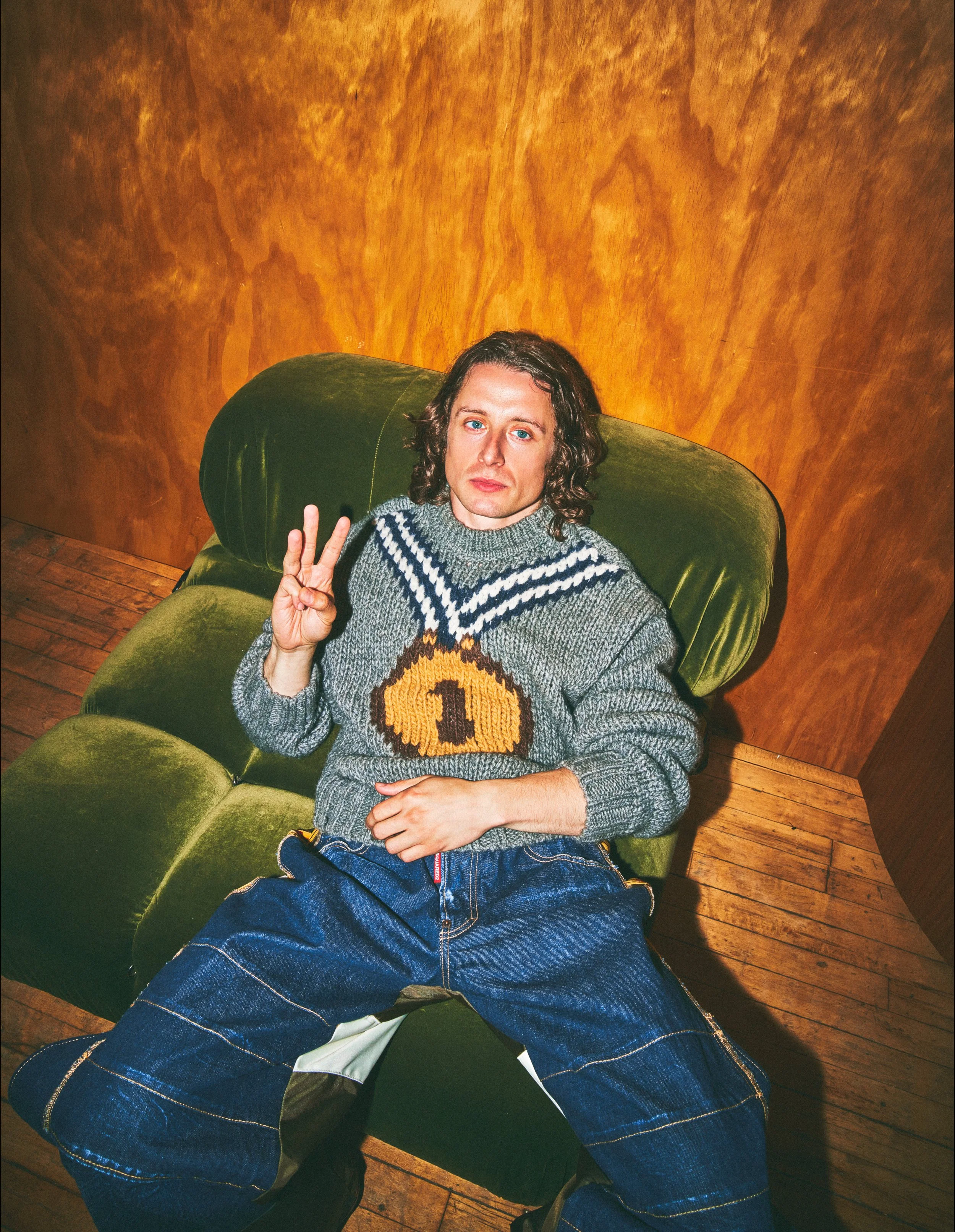
Total look DSQUARED2.
RC __ There she is. Hi! Hey, come here. Wow. Kiss. Suck your little thumb. Good job. [smiles]
DG __ She is absolutely adorable [smiles] And the thing is, she's perfect for this. Kids are so curious. She's going to love this.
RC __Yeah. Her first interview. [laughs]
DG __ Exactly! [laughs] We're living through a period of extraordinary technological, cultural, and political change. Do you feel optimistic about where humanity is heading? Or, especially now that you have a child, are you more apprehensive about the future?
RC __ I've always tried to be optimistic. I know a lot of people who are feeling very doom and gloom right now, and I've never been on social media. I've never touched it. So maybe that's why it's not affecting me. When I have a friend who's panicking and going on a rant about the future, the common denominator is that they're all on Instagram. Not to say that's where they get their news, but I think it influences a lot of people. I think algorithms are freaking people out, and I kind of think there's a reason for that. But I think both things are true. I mean, AI is probably what we're mostly talking about, what most people are panicking about, along with war. I don't know. There's reason to panic, in a way, but probably not as much as people think. I think every generation believes it's the last. I read a lot of historical journals. I've always been big into history, and I know Abraham Lincoln thought civilization was going to collapse in his lifetime. They didn't even have nuclear weapons then, and people still thought it was the end. So this feeling that we're the last generation isn't unique to us. It's just a very human thing, and that's probably what keeps us surviving. So, yeah, I am optimistic. Why not be? And when it comes to having kids, I know a lot of people who don't have children because they're afraid of the future. But even if the metaphorical asteroid hits, do I want to be hiding under a table, or do I want to be bathing my child? I want to be bathing my child. I want to experience all the human things I can. And maybe this is the most human thing I can do: raise the future. [smiles]
DG __ So much wisdom. I couldn’t agree more. And look at how she's staring at you while you're saying that. She adores you. You're her whole world.
RC __ Yeah, she loves Papa. [smiles]
DG __ It turns out that being optimistic has always been the better way to live. You don't spend your time dwelling on negative thoughts, and ultimately, you live a better life. Things might just turn out okay, as you said. It's about being more relaxed.
RC __ Yeah. Those are the people who hold the light and pass the torch to the next generation. I think a lot of people might look back at this time as the golden age, but I think these are probably the dark ages. When she's an adult, she'll look back at this time and say, "I can't believe they acted that way, and I can't believe they used those things." So, yeah, I think the future is bright.
DG __ Let's talk about Carl in Nocturne. I'm not sure he would necessarily agree with what you just said about optimism. He seems to have a genuine desire to help others, but I also get the sense that a lot of it comes from insecurity. His relationship with Jurek reveals a need for recognition and significance. Do you see him as genuinely compassionate, or does that compassion come, at least in part, from his own insecurities?
RC __ A little bit of both. I think he's compassionate, but deep down, he's also selfish. He's doing what he's doing for selfish reasons. I think he likes the excitement. He likes the way Jurek makes him feel and how appreciated he feels. And there are parallels to my own life. I've been acting for 30 years, and not a lot of people know that. A lot of people are surprised. They think I just popped up, like, "Oh, another Culkin came out." But no, I've been around for 30 years. I've never really cared about recognition or anything like that. But when I do get it, when I get appreciation from my peers, it means a lot to me. I'm moved by it. I think Carl is in a similar situation. He's good at his job. He puts in the work, but nobody really appreciates him until Jurek looks at him a certain way and makes him feel appreciated. I felt the same way with Stephen [Graham]. He was praising my work on set, and I felt so appreciated. It made me feel amazing. So I've let some of that experience bleed into the performance, just being charmed by this man.
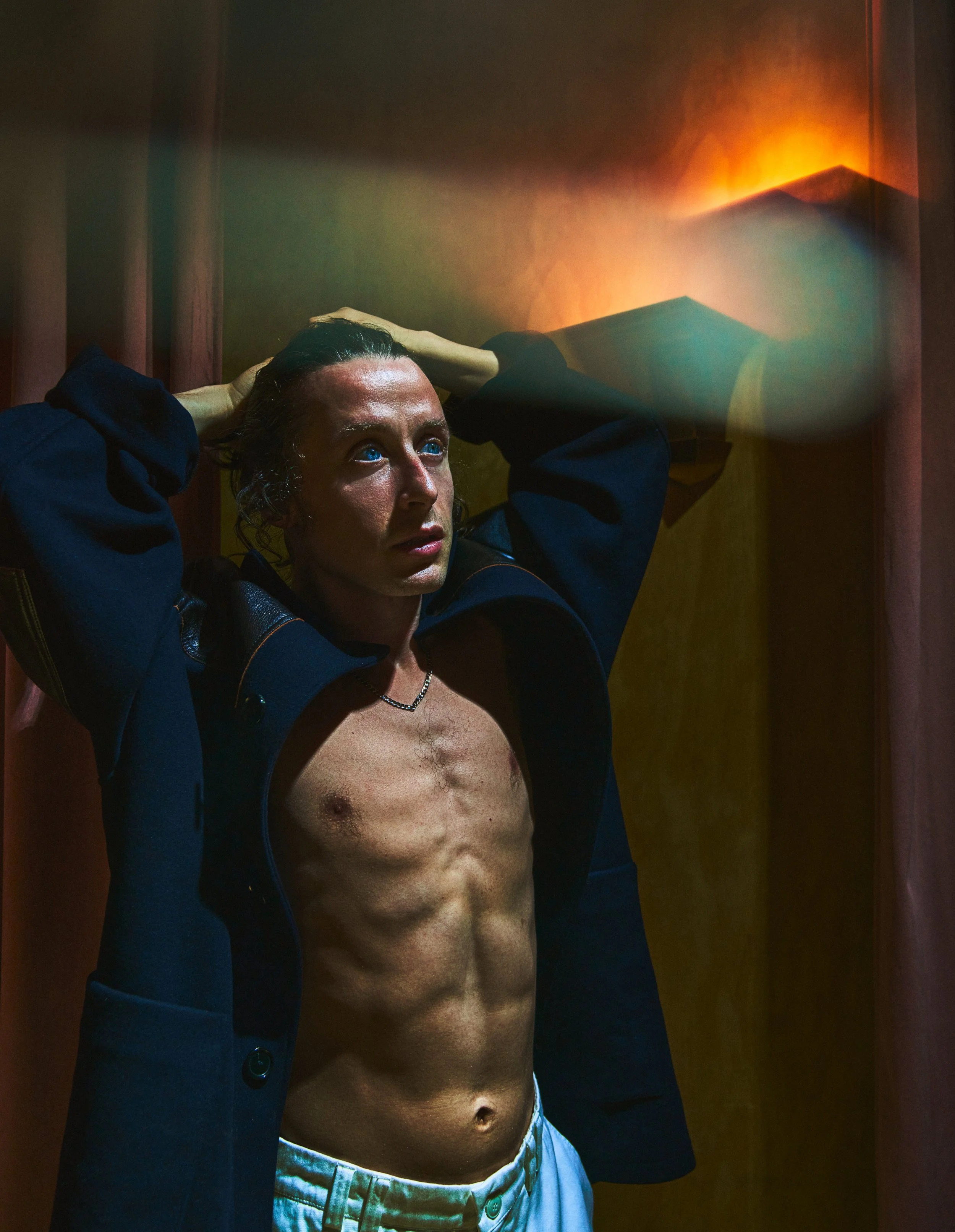
Jacket: BOSS, pants CANALI.
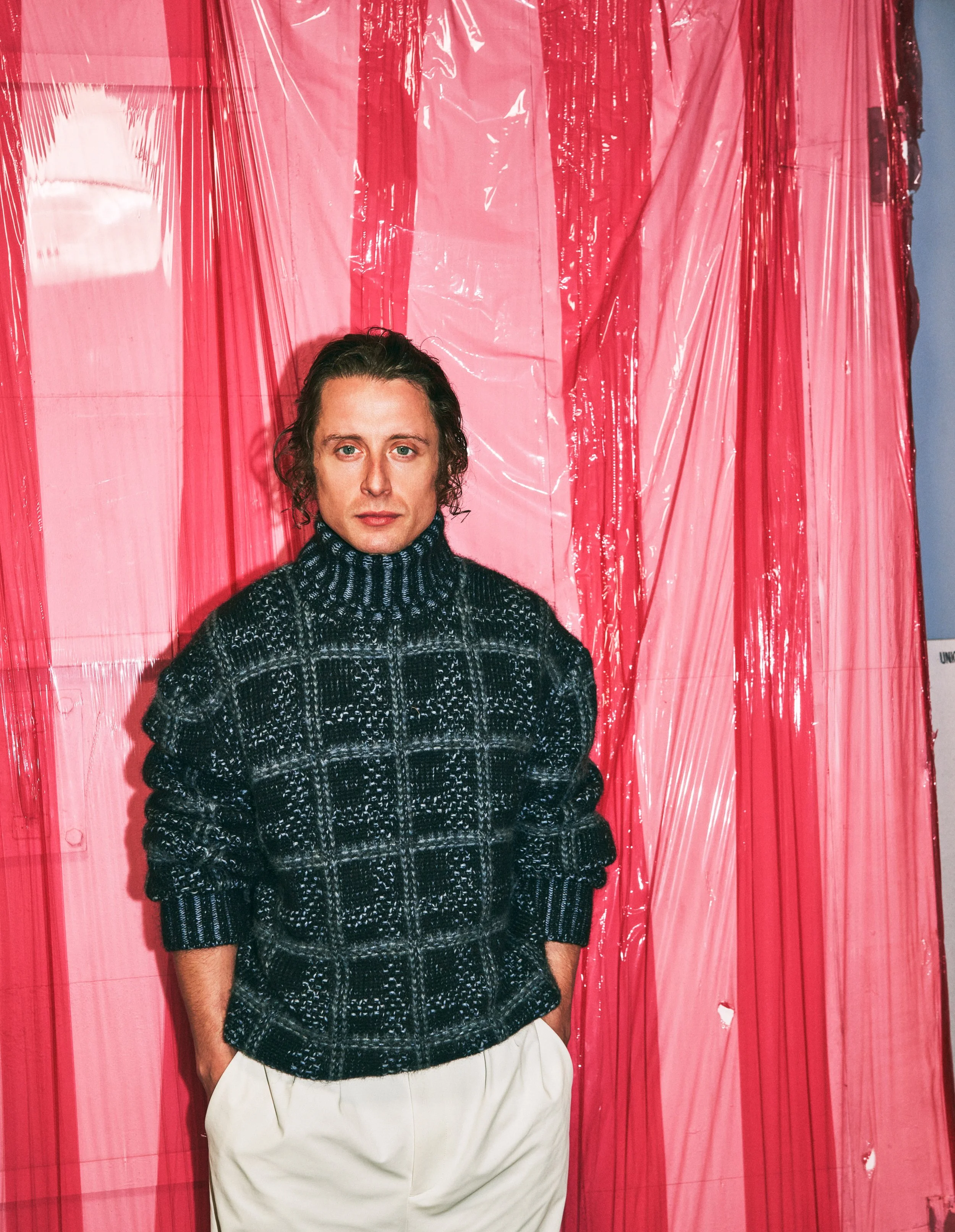
Sweater CANALI, pants LACOSTE
“ SOME PEOPLE WANT TO BE MANIPULATED. SOME PEOPLE ARE EXCITED BY IT. ”
— RORY CULKIN
PROMOTION
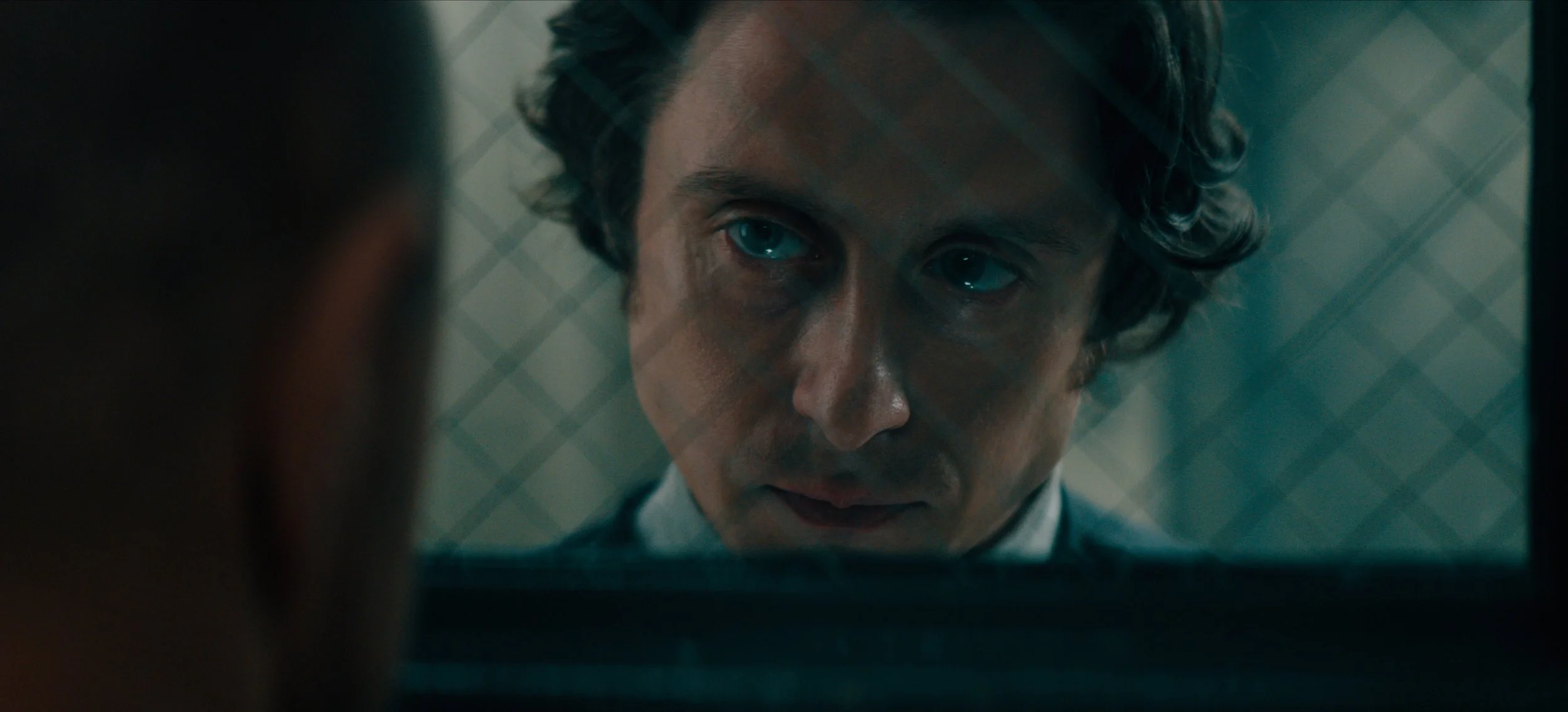
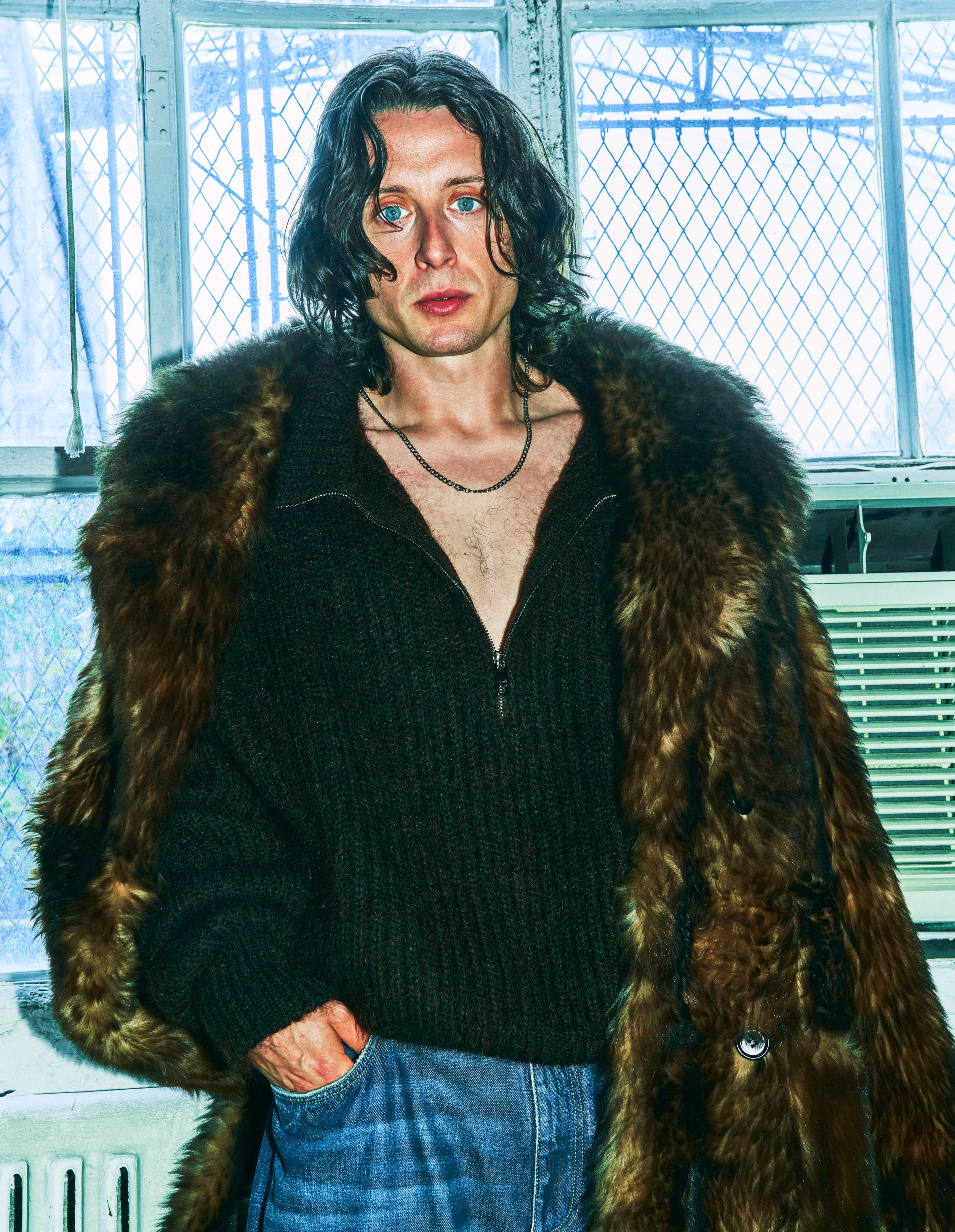
Total look DOLCE & GABBANA.
DG __ Do you think Carl is aware of his own vulnerability, or is that exactly what makes him susceptible to manipulation?
RC __ Some people want to be manipulated. Some people are excited by it. It's why people go to the movies. Why do they go to a horror movie? They want to be scared. They want to be manipulated. It's why you go to a magic show. You want to be tricked. You want to see if you can be fooled. So, yeah, I think Carl enjoys playing with fire. Sometimes playing with fire can be fun, and it can be more exciting than the mundane. So why not?
DG __ What about you?
RC __ I've definitely had phases in my life when I wanted to be corrupted a little bit. I wanted to experience things that were kind of dangerous. And that just builds character, if you survive.
DG __ What's the most dangerous thing you've ever experienced?
RC __ It happened right before we started shooting Nocturne. It wasn't something I chose to do, but I was upstate in Kingston, New York, and these two guys tried to mug me. They were strung out, and they wanted my bag. I was completely alone, so I had to pretend there was a group of people watching them. They started looking around, and I began running. They chased me and eventually cornered me. I managed to shove my way through, and eventually I found Kate, my partner, in the car. I jumped in, and we drove off. But they had me cornered and alone. They could have taken their time with me and done awful things. They could have killed me. We went home, and I ate a peach that night. It was the best peach I've ever had. I just felt alive. I could have had my jaw wired shut. I could have been seriously hurt, but instead I was alive and completely unscathed. God, it was exciting. I guess I got close to the fire and survived. It's weird, but I loved the experience. It was a hit of adrenaline. It was exciting.
DG __ When people go through an experience like that, I see they mostly react in two very different ways. Some close themselves off and become much more careful and cautious. Others try to put themselves in similar situations again.
RC __ I guess I just try to use it for my work, I suppose.
DG __ That's the best way to process it. Nothing goes to waste. So, what did playing Carl teach you about the boundaries between empathy, fascination, and obsession? I get the sense that he becomes obsessed with Jurek, which is why I'm asking.
RC __ Honestly, Carl was a little vague on the page, which I was excited about because I felt like I could color him in and fill in the blanks. Maybe my idea of Carl wasn't the writer's initial idea of him, but eventually we met somewhere in the middle. I guess my discovery with Carl was that he's flawed, and that maybe he's doing things for selfish reasons. Maybe he's being fooled to an extent, but maybe he's also aware of everything that's going on and actually likes the experience. It's almost like this guy thinks he's completely manipulating me. And he is, but I'm allowing it. The more I layered Carl, the more flaws I found in him, which was exciting. It's interesting to discover things about your character that aren't necessarily heroic or righteous. I think some actors always try to do the right thing in a scene. They think, "Well, my character would be protective at this moment." But maybe your character isn't perfect. Maybe your character has flaws and is selfish. So, yeah, playing a flawed character is the exciting part of the job. Sorry heating up a bottle.
[Rory steps away to go to the kitchen.]
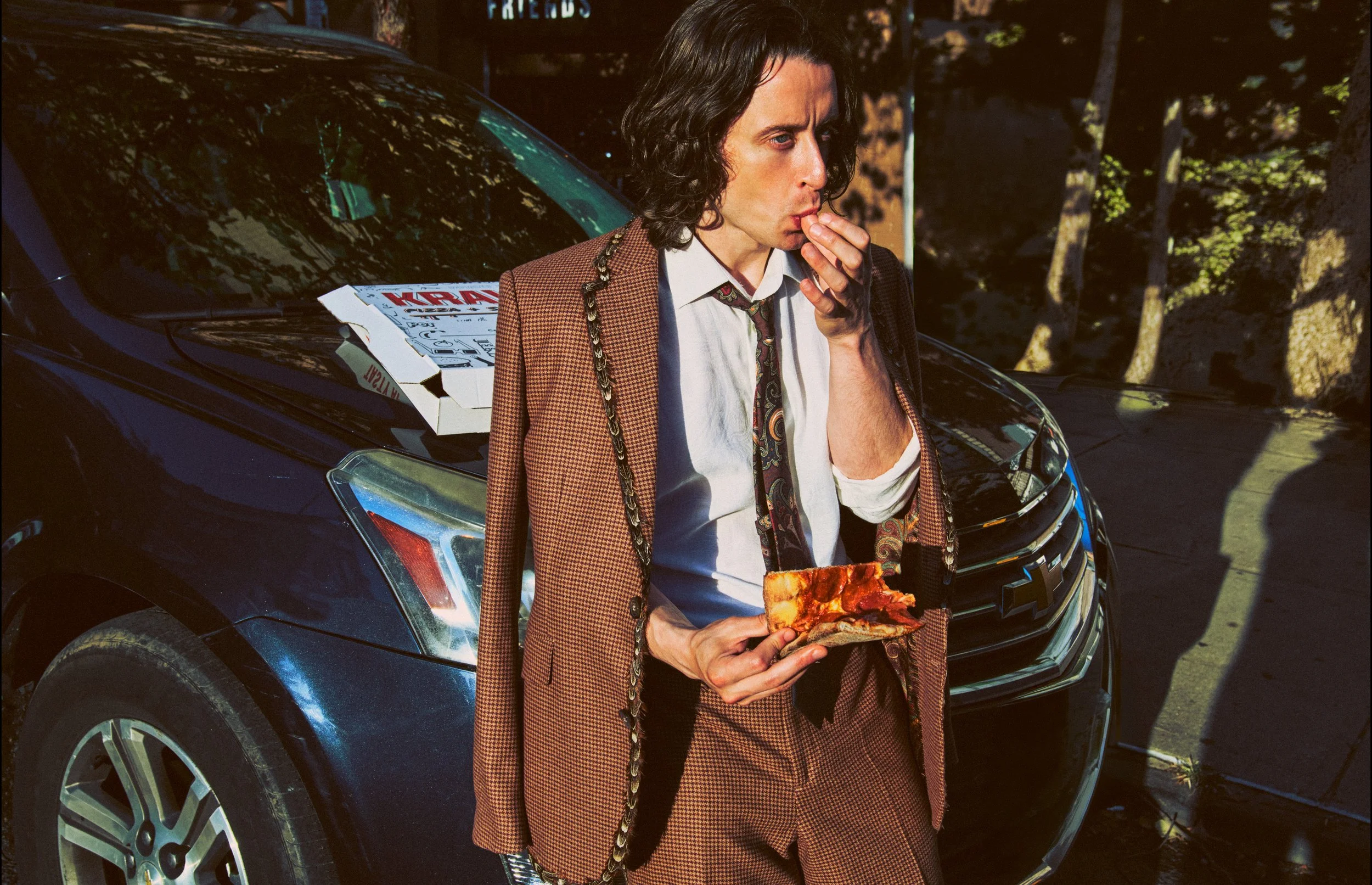
Total look ETRO.
“ I'VE DEFINITELY HAD PHASES IN MY LIFE WHEN I WANTED TO BE CORRUPTED A LITTLE BIT. AND THAT JUST BUILDS CHARACTER, IF YOU SURVIVE. ”
— RORY CULKIN
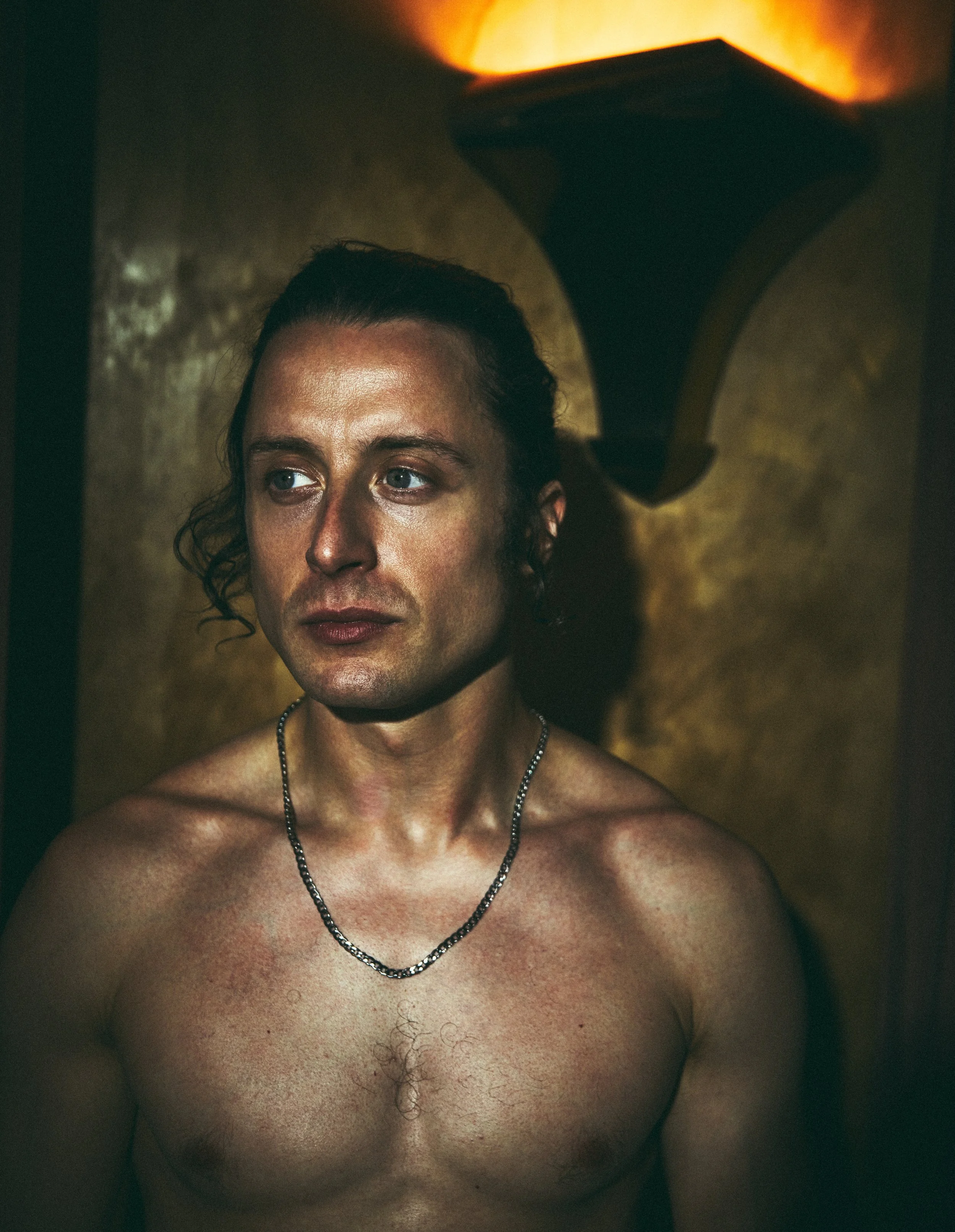
DG __ Did the experience of playing Carl make you think differently about human nature?
RC __ Not really. I just selfishly looked at it in terms of my own nature, Rory's nature, and Carl's nature. I didn't really think about it more broadly at the time.
DG __ What do you mean when you say you were being selfish?
RC __ I try to be a generous actor on set, but when it comes to studying, I'm pretty selfish. I'll read the scripts once or twice, and then I'll physically take out all the scenes I'm not in. So my script is just Carl's story. It's the Carl Bible. In that sense, I'm the lead of my own story. It's a selfish approach, but it works for me. And sometimes it can pay off in unexpected ways. There was one episode where I had a line about a character named Jonah. I went over to the writer and asked, "Who's Jonah?" They laughed and said, "Well, he's the lead of our show." I said, "Yeah, but who's Jonah?" And they were like, "Oh, right. You wouldn't know who Jonah is," because Carl doesn't know Liev Schreiber's character. He wouldn't know Jonah. He's not watching the show. So being selfish can actually pay off in that way.
DG __ I've never heard of that technique. It’s really smart. By not reading about the other characters and what they're doing, you're avoiding any preconceived ideas. It makes your performance feel more authentic because you're not bringing knowledge into the character that he wouldn't naturally have.
RC __ Yeah. The other characters I'm not in contact with are irrelevant to me. Obviously, like I said, I read the script once or twice because you want to serve the project as a whole. But then you kind of forget about it.
I do the same thing with my own scenes. I'll read them, absorb them, come up with an approach, and then throw it all away. I just trust myself to make the right decision in the moment, especially opposite someone like Stephen Graham, who's really helpful.
DG __ What do you think is more difficult for people: accepting who they are or accepting who other people are?
RC __ I guess accepting who other people are. Who you are can be fluid, I think. You should be able to change. You should be able to change your opinion when you're presented with new information. So I guess it's about accepting other people, because they can really affect you, and your relationships with them can affect you. It's about being able to say, "Okay, that's who that person is right now." But when it comes to myself, I'm pretty pliable. I can change. Accepting who you are sounds so permanent.
DG __ Yet we resist change, don't we?
RC __ I guess so. But I've just had such a huge change in my life, and it's amazing, so I'm not very resistant anymore.
DG __ Fair! What kinds of stories do you think we're not telling enough today, but should be?
RC __ I'm seeing a lot of projects about AI now, to the point where I'm like, "All right, how many times are we going to do this?"
DG __ We probably shouldn't have started 40 years ago! It’s getting repetitive! [laughs]
RC __ I like period pieces, too, but I really like stories that take place in the present day and still feel timeless. When someone manages to accomplish that, I'm always really impressed. Something that takes place today but could just as easily have worked 30 years ago. I think classic stories that could work in any era, whether in medieval times or the 2020s, are the most impressive.
DG __ Can you give me a couple of examples of films that fall into that category?
RC __ I really liked Obsession. That was great. There was another movie called Our Hero, Balthazar, which came out earlier this year, with Asa Butterfield. It's very much about the present, but somehow it felt almost like an '80s movie. It deals with social media, school shootings, and all these contemporary issues, but it still has that timeless quality. It's really impressive. Asa Butterfield has quickly become one of my favorite actors. This younger guy is really great. Those are a couple of examples off the top of my head.
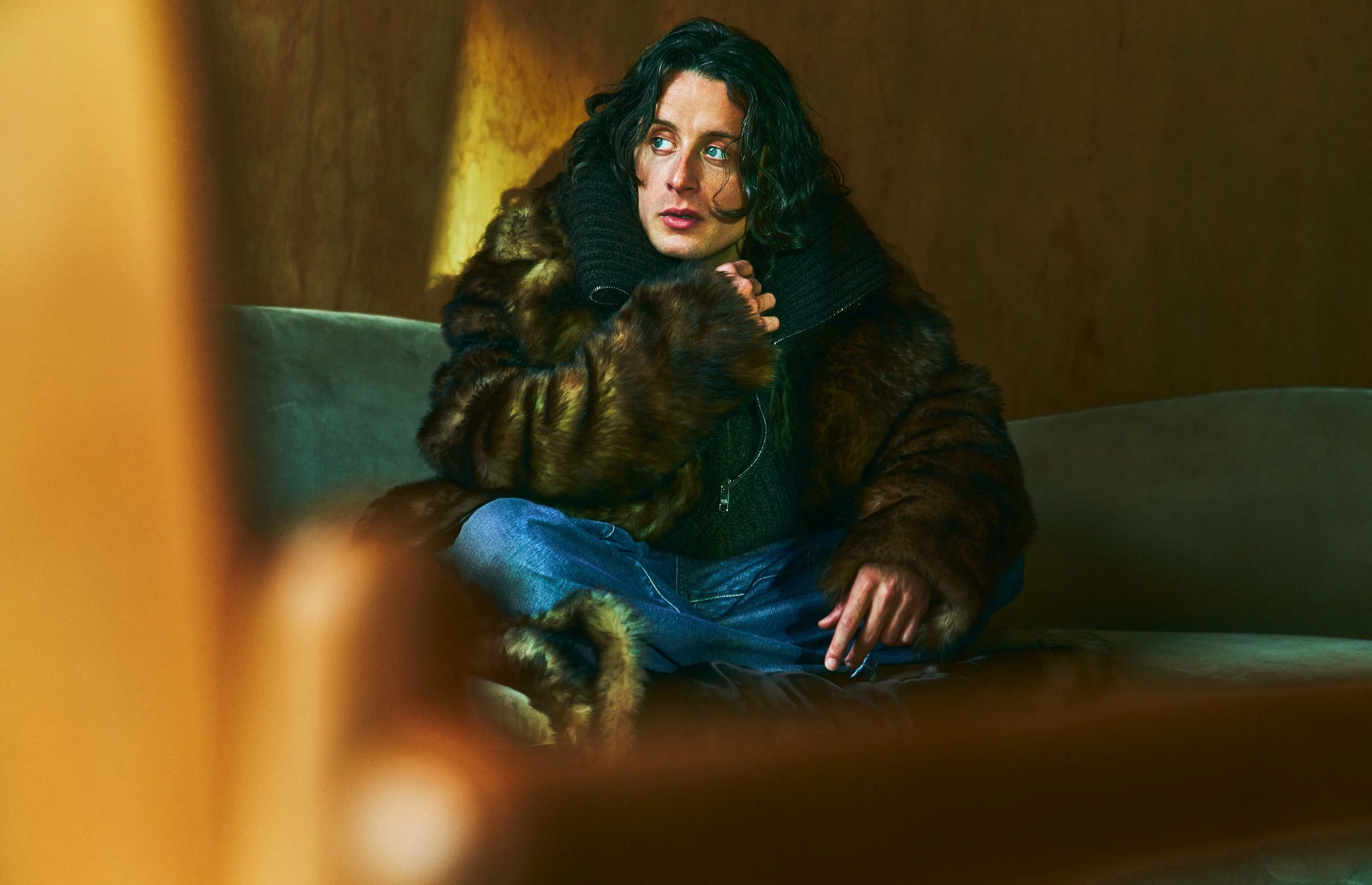
Total look DOLCE & GABBANA.
“ I HAVE NEVER BEEN HAPPIER, AND A LOT OF IT IS BECAUSE OF HAVOC. I'D DO ANYTHING FOR HER. ”
— RORY CULKIN
DG __ What about some older classics?
RC __ My favorite film of all time is 2001: A Space Odyssey. But that one spans all of time, which is why I love it. It goes from the dawn of man to the evolution of humanity. It's really ambitious and really impressive.
DG __ Would that be your dream project to be in?
RC __ I've always wanted to go to space. That was always my goal: get me in a movie where I'm in space. But what else? I think Vietnam would be pretty sick, too. I'd like to fight in 'Nam.
DG __ If you could remove one expectation that society places on people, what would it be?
RC __ The measure of success. Maybe it's different now, but growing up, it was always, you know, insulting someone by asking, "What, do you want to be a waiter your whole life?" It's like, well, if he's happy, then why not? Achieving things is often seen as the measure of success, when clearly, I don't know, happiness and confidence are what really matter. So, yeah, I guess the whole idea of what success is could use some shifting.
DG __ I think we tend to place a lot of emphasis on financial success, even if you're very unhappy with what you do.
RC __ Yeah. I think that's it.
DG __ I see things are going your way. Do you feel happy?
RC __ I have never been happier, and a lot of it is because of Havoc. I’d do anything for her.
Photography Guy Aroch, Stylist Odile Iturraspe (IMAJ Artists), Interviewer David Gargiulo, Groomer Rheanne White (Tracey Mattingly), Production David Gargiulo, Assistant Photographer Matthew Ellis, Assistant Stylist xxx, Talent Rory Culkin (Independent PR), Documented in New York City, Show Nocturne for Apple TV+
