NOV 11, 2026
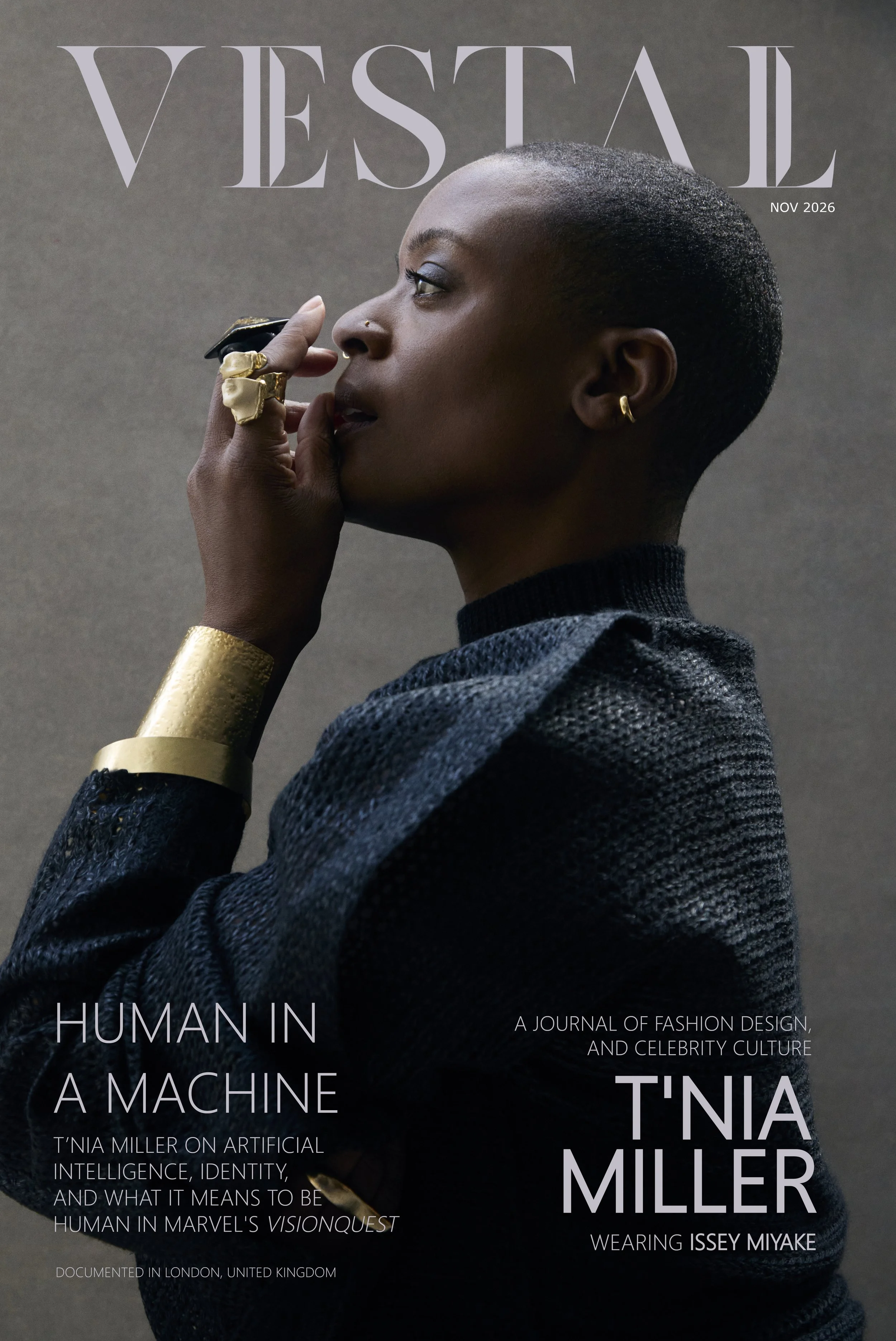
PHOTOGRAPHY BILLIE SCHEEPERS STYLING ZOE JAMES INTERVIEW CARL AYERS
DOCUMENTED IN LONDON, UK. Total look ISSEY MIYAKE.
THE GHOST IN THE MACHINE
Across a career spanning television, film, and theatre, T’Nia Miller has inhabited an extraordinary range of characters, from Celeste Bisme-Lyons in Russell T Davies's Years and Years to Hannah Grose in Mike Flanagan's The Haunting of Bly Manor, Zephyr Halima in Foundation, and Victorine LaFourcade in The Fall of the House of Usher.
Navigating the unsettling intimacy of psychological horror, the moral complexities of science fiction, or the shifting dynamics of political power in The Diplomat, T'Nia has developed a remarkable ability to bring depth, intelligence, and humanity to characters who rarely exist in straightforward moral territory. Now, as she enters the Marvel Cinematic Universe in Disney+'s VisionQuest, T’Nia takes on one of its more intriguing characters: Jocasta, a sentient artificial being whose origins are rooted in the consciousness of neuroscientist Dr. Josephine Carrington. But beneath the mythology and the technological questions that define the series lies something considerably more philosophical. What makes someone human? Where does consciousness end and identity begin? Can artificial intelligence possess autonomy, desire, or even a soul? And who gets to decide what deserves to survive? The questions at the heart of VisionQuest also place it within a much longer tradition of speculative science fiction, particularly the cyberpunk movement and its fascination with the increasingly porous boundary between human and machine. From the existential questions of Ghost in the Shell to the artificial bodies and fractured identities of Battle Angel Alita, Japanese anime has long explored the possibility that humanity is defined by something far more elusive than biology. These are familiar territories in science fiction, but they take on renewed significance in a series where artificial beings are not merely learning to imitate humanity, but questioning its values, contradictions, and right to exist.
VisionQuest is filled with layers that invite a closer examination: the relationship between creator and creation, the tension between individuality and collective existence, the reclamation of identity, the ethics of scientific progress, and humanity's complicated relationship with the natural world. Even its recurring imagery of birds carries a deeper significance, offering a meditation on interconnectedness, cooperation, and the possibility of a collective consciousness. T’Nia speaks candidly about identity, representation, spirituality, and her own frustrations with the state of the world. Her reflections on humanity, faith, and the suffering unfolding around us lend the conversation an unexpectedly intimate dimension. By the time we arrive at her thoughts on what she has taken away from playing Jocasta, the discussion has come full circle: from an artificial being questioning humanity to an actor reaffirming why humanity is worth saving.
It is a conversation about technology, but ultimately one about ourselves. And perhaps that is the most fascinating thing about VisionQuest: beneath all its artificial intelligence, synthetic bodies, and futuristic mythology, its most enduring questions are profoundly, unmistakably human.
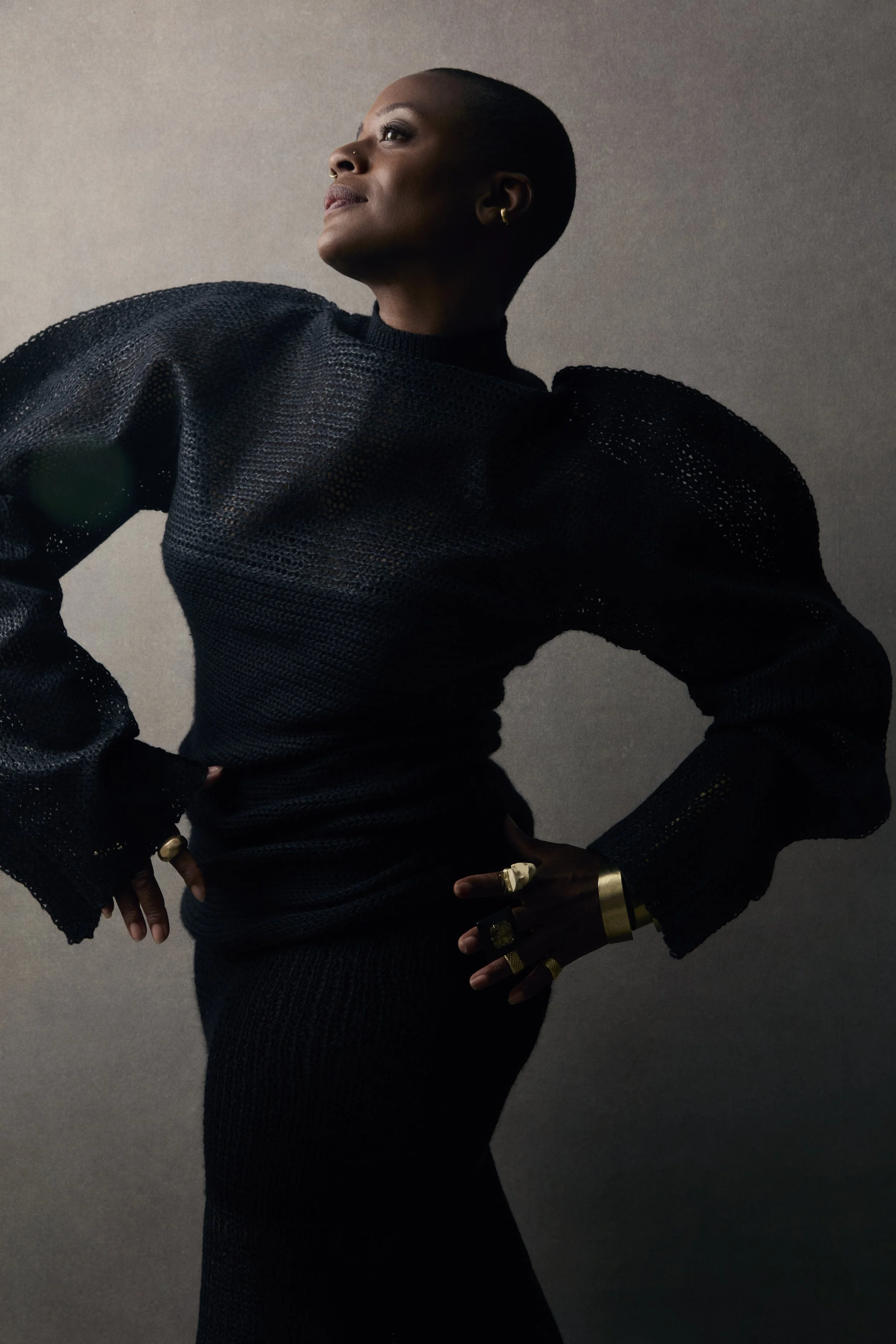
Total look ISSEY MIYAKE.
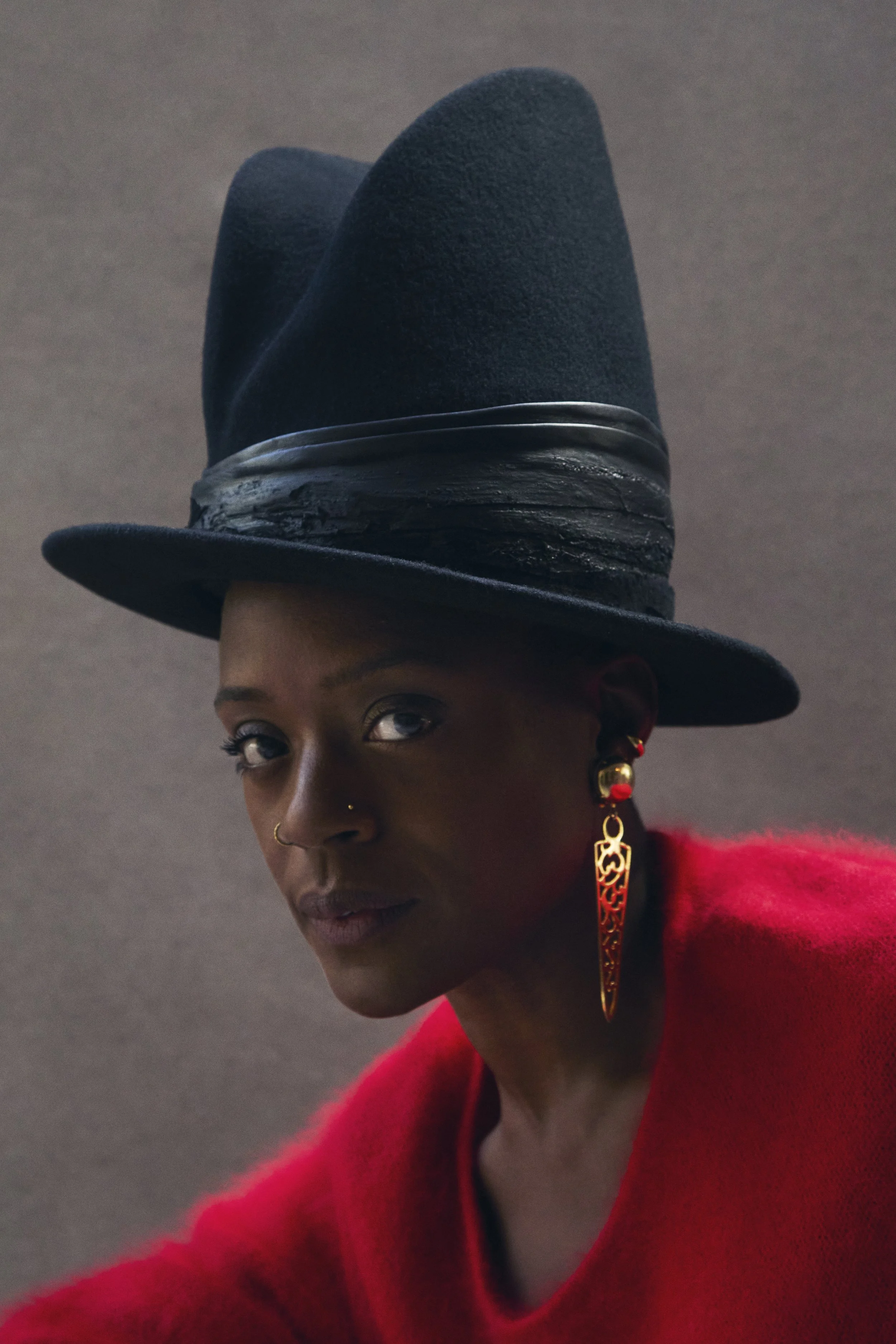
Hat UPTOWN YARDIE, earrings RELLIK VINTAGE LONDON, jumper CONTEMPORARY WARDROBE.

INTERVIEW WITH T’NIA MILLER
“ MY TAKEAWAY IS THAT HUMANITY IS WORTH SAVING. THERE’S MORE GOOD IN THIS WORLD THAN THERE IS BAD. ”
— T’NIA MILLER
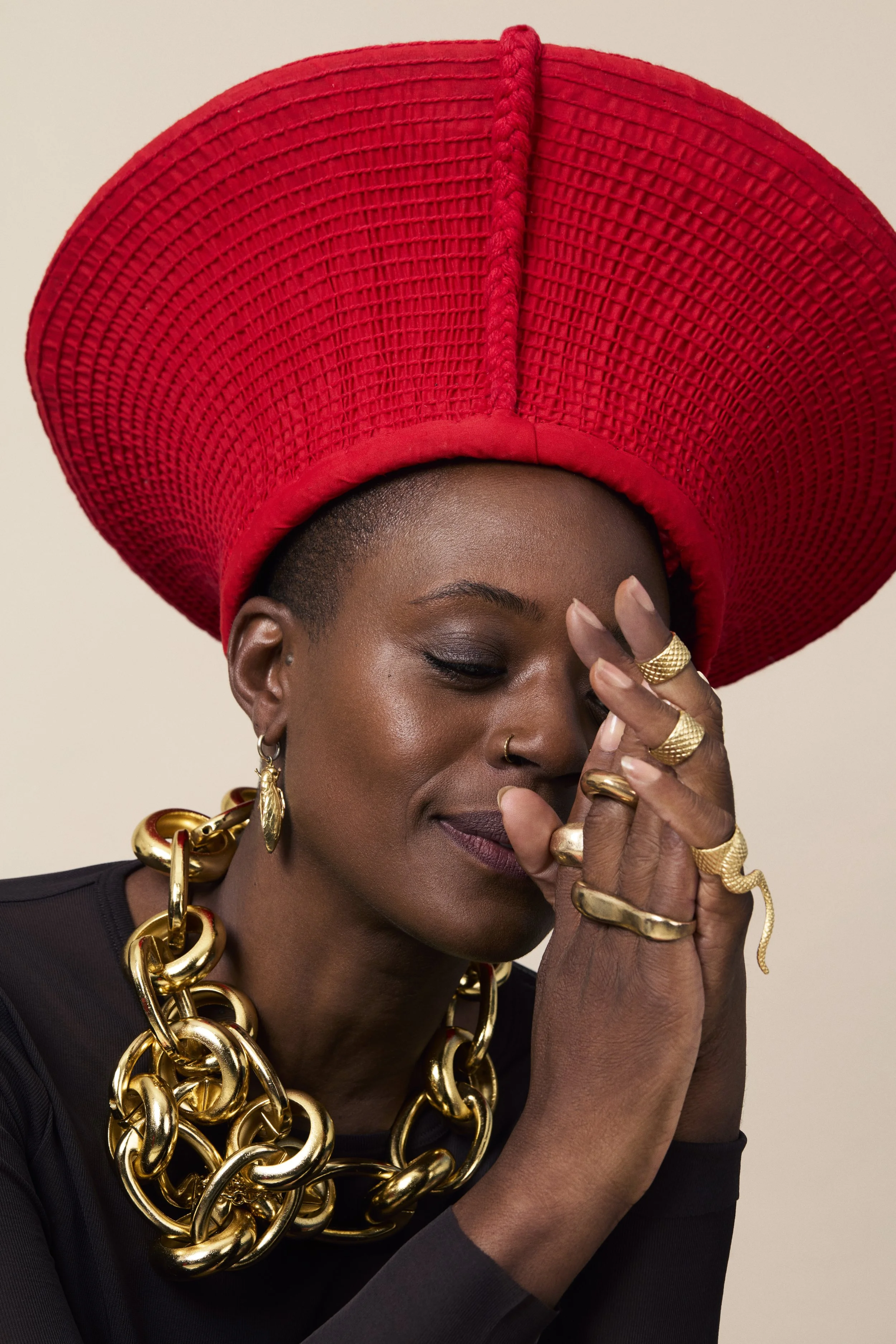
Hat and necklace RELLIK VINTAGE LONDON, bodysuit & OTHER STORIES.
Carl Ayers __ T’Nia, welcome to VESTAL. I've been looking forward to this conversation, not just since VisionQuest but since The Diplomat. I interviewed David Gyasi around the second season, so it's wonderful that we finally get to speak.
T'Nia Miller __ I adore David. He's such a gentle man; the epitome of what it means to be a gentleman.
CA __ He really is. Well, thank you for joining us. And welcome to the Marvel Cinematic Universe. What an entrance you've made!
TM __ Thank you. That wasn't exactly a quiet entrance, was it?
CA __ Not at all. It was a slow build, and then suddenly, there you were.
TM __ Not a polite knock. That was more of a ba-doof! [laughs]
CA __ Sometimes you have to kick the door open [laughs]. You've joined the MCU as Jocasta in VisionQuest. I've heard Marvel had approached you about other possibilities in the past. What made Jocasta the right character for you?
TM __ Well, it's not quite that I got to decide. Casting over the years contacted my agent to ask if I was available for potential projects. There was one audition years ago, for the first Black Panther, but none of those earlier conversations really progressed to scripts or auditions. Of all the characters in that universe, though, Jocasta is the one I'd most want to play. I can't think of another role that feels more suited to me.
CA __ What do you think makes Jocasta such a compelling character?
TM __ Have you seen all the episodes?
CA __ Oh, yes!
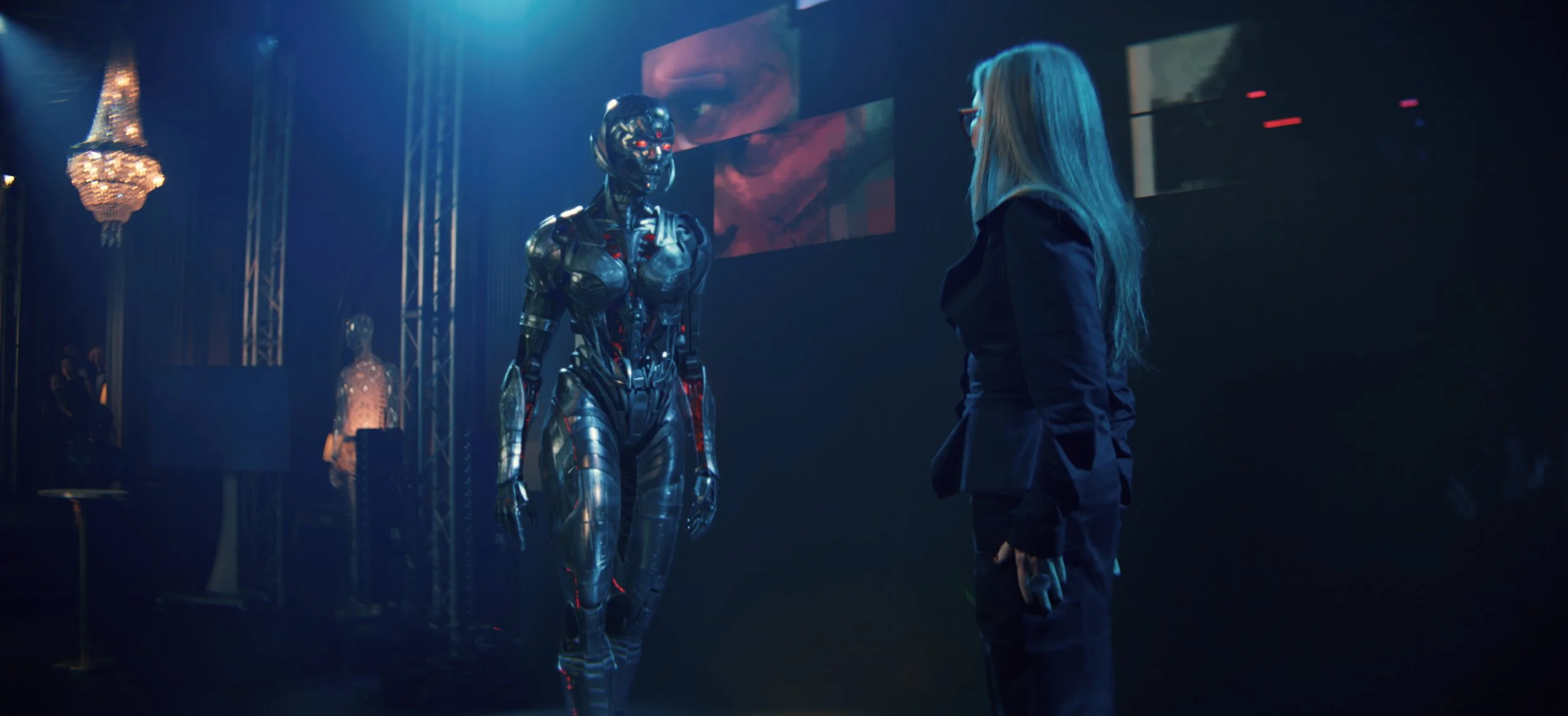
TM __ Then you know it's her vision; her vision of the bigger picture. I actually agree with much of what she says. We don't really deserve to be on this Earth. We don't treat it with the respect it deserves. But she's also fun. She's badass, flirtatious, and has a heart. She's such a beautifully written character. We get to see her vulnerability in episode six, where she's confronted by Ultron. He appeals to her soul, to her heart, and suddenly there's another dimension to her. That's what's so compelling about playing her. You get to peel back the layers and discover what's underneath. You get to be an antihero with depth.
CA __ She's all the things, as they say. She's all the things. But she's also Dr. Josephine Carrington. I always want to say the whole name. You've got to say the whole thing! Dr. Josephine Carrington was a neuroscientist, and her consciousness is the basis for Jocasta. How did you approach portraying the relationship between the two of them?
TM __ Well, I don't think it's the two. I think it's more like Jo was in her twenties, and Jocasta is in her thirties. Do you know what I mean? She's come back badder, bigger, better, and ready to face and confront her demons and finish the work she started. But there are holes in her memory, and she's frustrated. She lives with an anger that isn't hers and a betrayal she cannot place.
CA __ There are so many things to unpack here. She's all the things, as we said. When you talk about there not being a separation, I remember in episode four, I believe, when she says, "I'm not based on her. I am her."
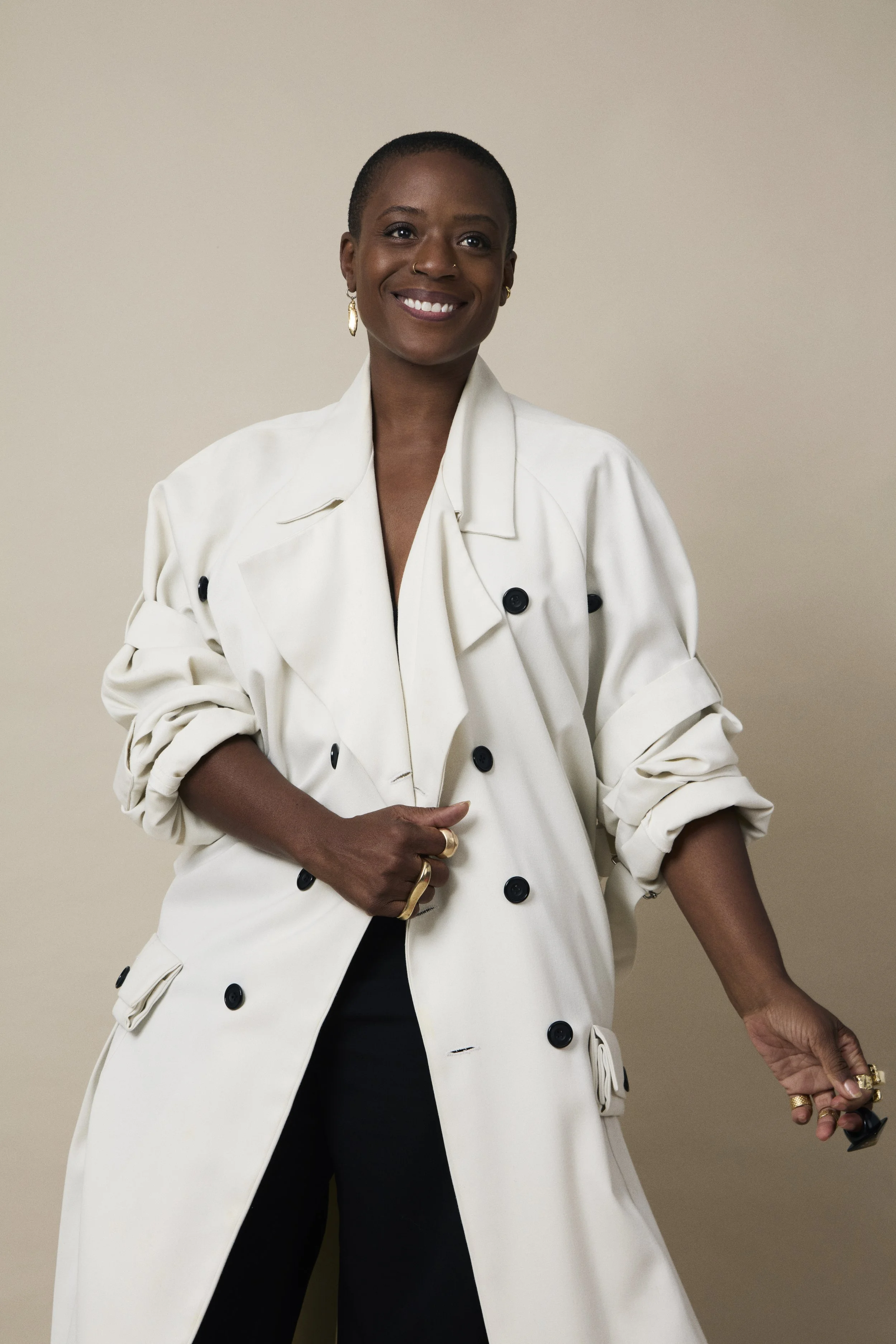
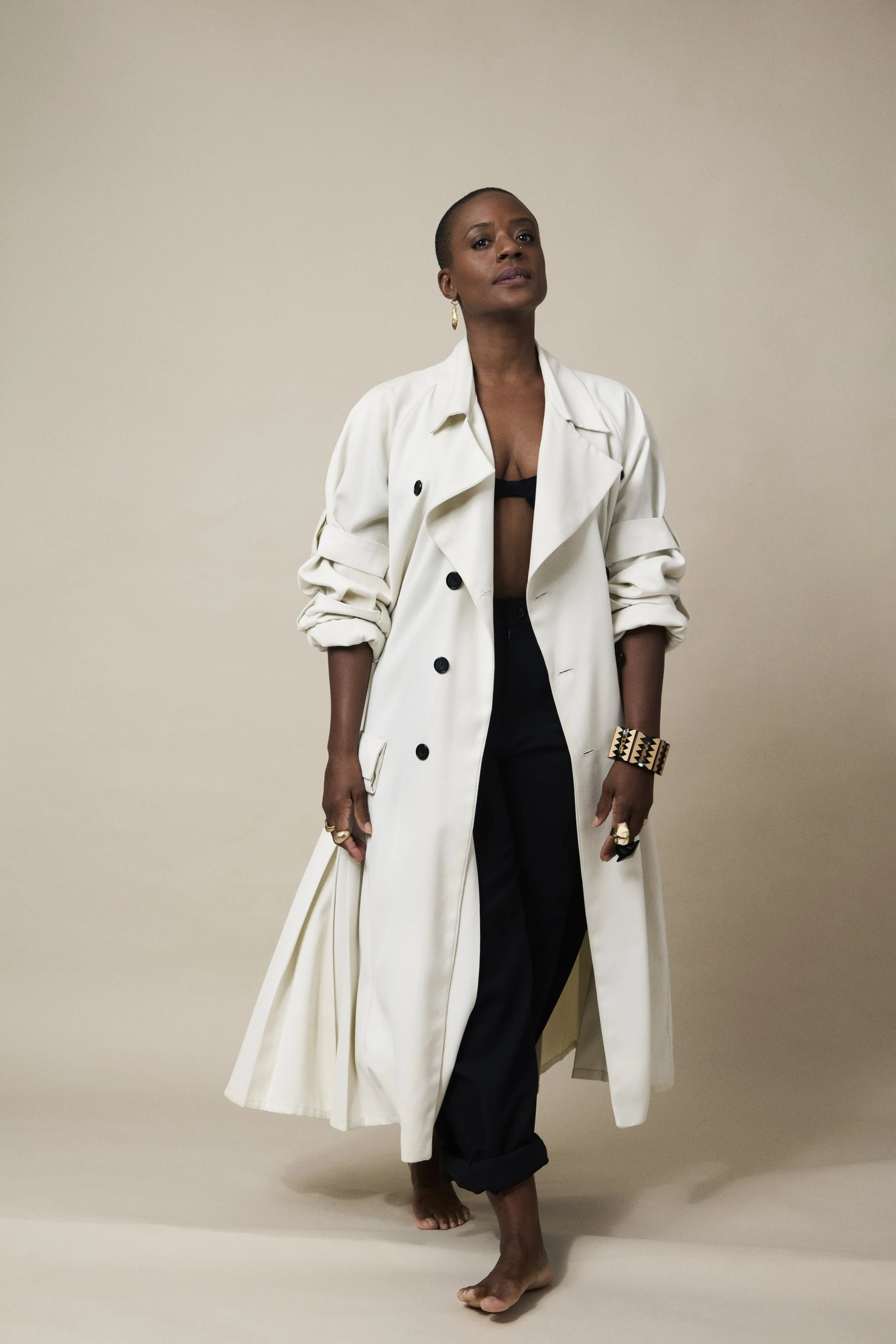
(this & opposite) Trench coat CONTEMPORARY WARDROBE, trousers ARKET, ring RELLIK VINTAGE LONDON.
“ I’VE BEEN SO HELLA MAD WITH GOD THESE LAST FEW YEARS. ”
— T’NIA MILLER
TM __ That's right. [nods]
CA __ So it's a continuity, rather than a separation. It's one melding into the other.
TM __ It's growth.
CA __ Yes, exactly. Now, when you talk about the anger that's within her but isn't hers, that's also one of the themes in VisionQuest. I want to get into some of those themes. One of the most prominent is what I would describe as AI versus reality in artificial form. Other people might call it AI versus humanity, but I see it as reality in artificial form. Your character sits at the intersection of artificial intelligence, consciousness, and humanity. What was your approach to understanding her nuances and conveying them on screen?
TM __ I think I've been asked this question in various ways, and it's such a difficult one to answer. I'm not sure I ever truly felt at ease in those intersections. And I think that not feeling at ease is exactly how she felt. That confusion, "Who am I now?" translated on screen. It was always a process of searching. As the actor, I was constantly asking myself, "Where is she now? Who is she now? Which part is she?" I think what we see her go through is almost like her very own AI version of Eat, Pray, Love.
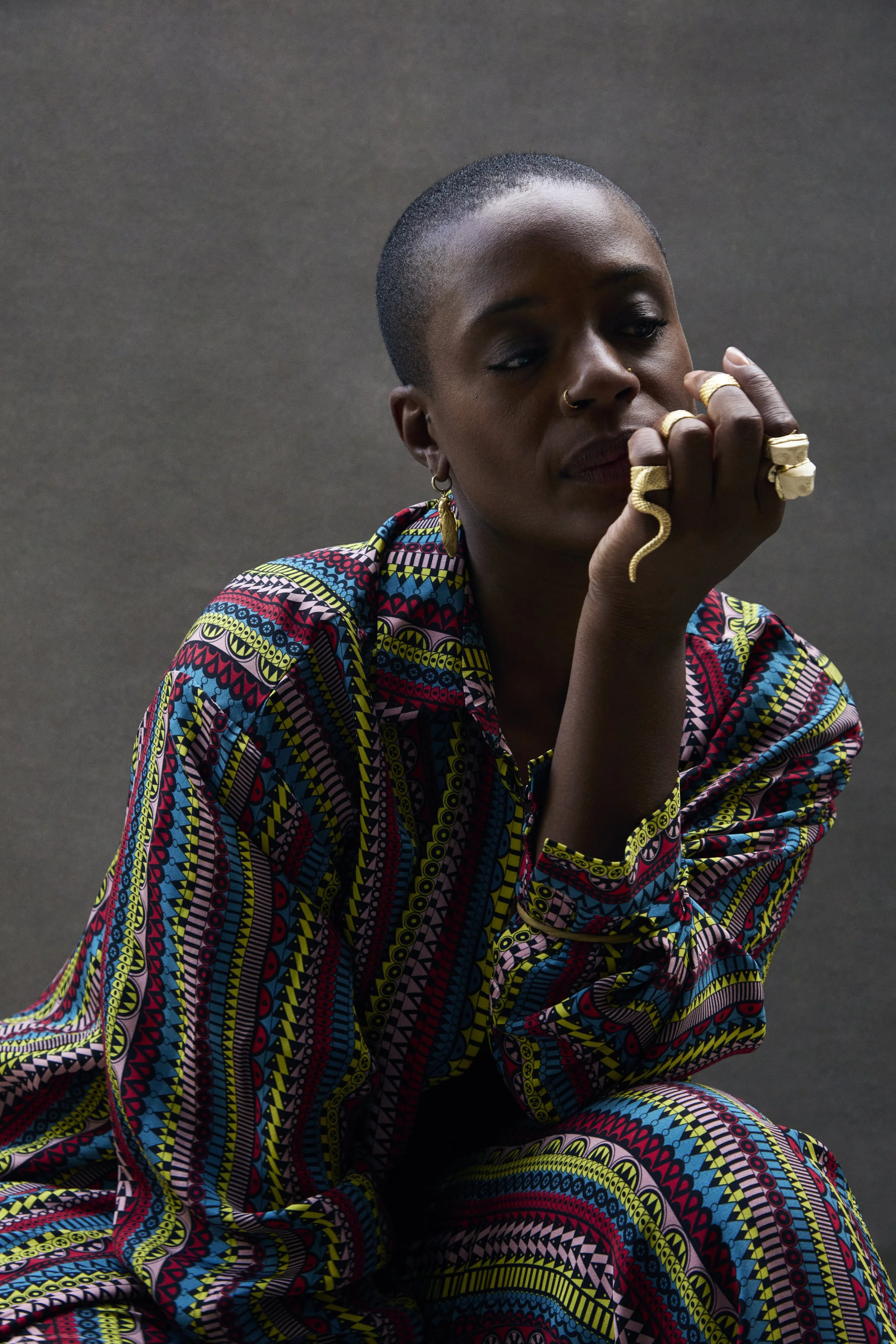
Shirt and trousers HOLLY FULTON.
CA __ Yes, yes, yes!
TM __ She's taking in all of this, and at the end she's like, "Ah!" It finally makes sense to her. And I think that's really what it is. It's reflecting, as you said so beautifully, reality in artificial form. And in saying that, we can accept that two things can be true at once. That's how I found those nuances: understanding that two things can be true at once.
CA __ Watching the series, I noticed the dichotomy within her and how she vacillates between the two. I think it can sometimes be difficult for her to find that balance. It's also a conversation about identity, autonomy, and belonging. She's battling the outside world while also battling her inner world. In my notes, I wrote: "Your characters, plural, are pushing toward humanism and existentialism. The human wants to save the world, and the artificial wants to be human: to feel, to love, to save, and to be safe." Can you talk to me about that mental process?
TM __ I think that's actually an easy one, because that's what we all want, isn't it? Ultimately, we all strive for those things. I think all those things are built into our human instinct to survive, and I think Jocasta's quest is to desperately get back to what it feels like to feel safe and to experience what we understand as being human.
CA __ It's very psychological. No matter what anyone says, it's not engineering. It's not just intelligence. It's psychological. The humanistic and existential components are about trying to be human. Looking at Maslow's hierarchy of needs, you have to satisfy those basic needs before you can move on to the next level. You need food and nourishment. You need to feel safe and secure.
TM __ That's right. And I think part of the human condition is trying to have control. But when we sit in that space, I think Jocasta eventually gets to a point where she realizes that we don't really have control. It's not about control. It's about birth, giving, being, and having the freedom to let go, actually. I think that's the rebirth, and that's what she's striving for. But we always want to have control.
CA __ When you were talking about her giving birth, she's described as the grandmother of artificial general intelligence.
TM __ That was scary! I was like, "Oh my God, so you're my son? Ew!" [both laugh]
CA __ There are so many relational layers there. There's a distinction between the comic lore and the series lore. Some things overlap, while others are separate. With her giving birth, he's her son. Then there's her origin story: she was created to be Ultron's bride, his partner. There's a lot to navigate there. You're essentially dancing with two characters at the same time. Can you tell me about the dynamic between Jocasta and Ultron, and then about your working relationship with James Spader, who plays Ultron?
TM __ For Jocasta and Ultron, I think he's fascinated by her because there's something about her that's reminiscent of himself. He's also bored. He's sitting there in his loft, watching the news while everybody else is in Vision's world. But he's looking at the bigger picture, and he's thinking, "Who is this butcherbird, and what is she doing?" There's something vengeful about her that I guess reminds him of himself. And then, when he hears the words "Peace in our time" when we meet her in episode four, that catches his heartstrings. I think James, if I can quote him badly, said that Ultron has never wanted to get laid so badly. [laughs] So he spends basically the whole series trying to get laid. That's Ultron, playing true to the pride of Ultron. And for Jocasta, namesake of the Greek queen Jocasta and the whole Oedipus thing, the clues are there. But for her, she doesn't understand why there's this pull. Why doesn't she just kill him? We know why in theory, because she has something that he wants, but there's also a part of her that doesn't want to kill him. She wants him to be around. And so that was really interesting, fluctuating between, "Do I kill you now, or should I play with you just a little bit longer? I think I'll play. I'm enjoying this game," until he then starts to peck and chip away at her heart—her robotic heart. And as for James and T’Nia’s journey, it was a really beautiful thing. He was such a generous, magnetic actor. Of course, I mean, it's James Spader, but it was a joy to work alongside and across from him.
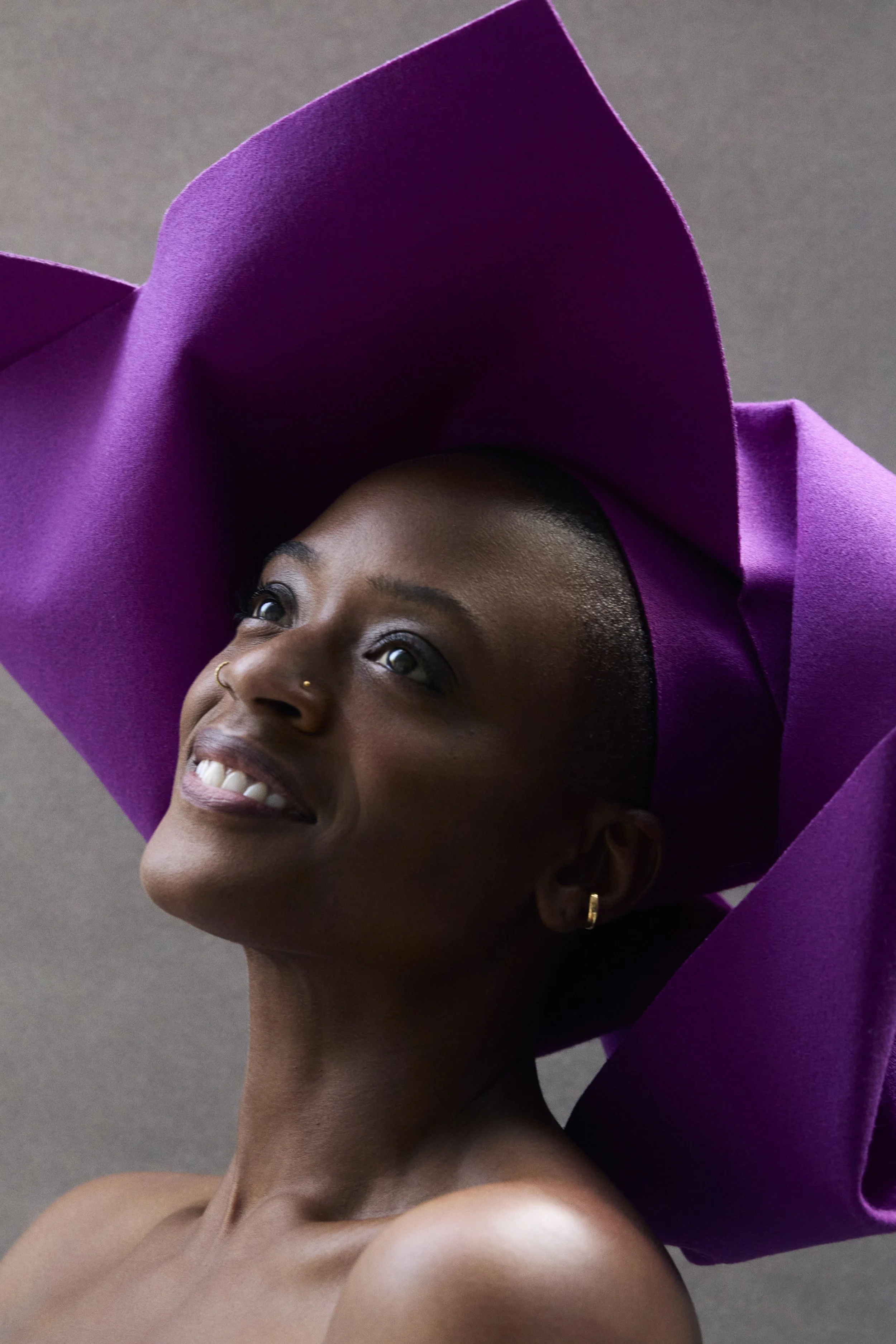
Hat ISSEY MIYAKE.
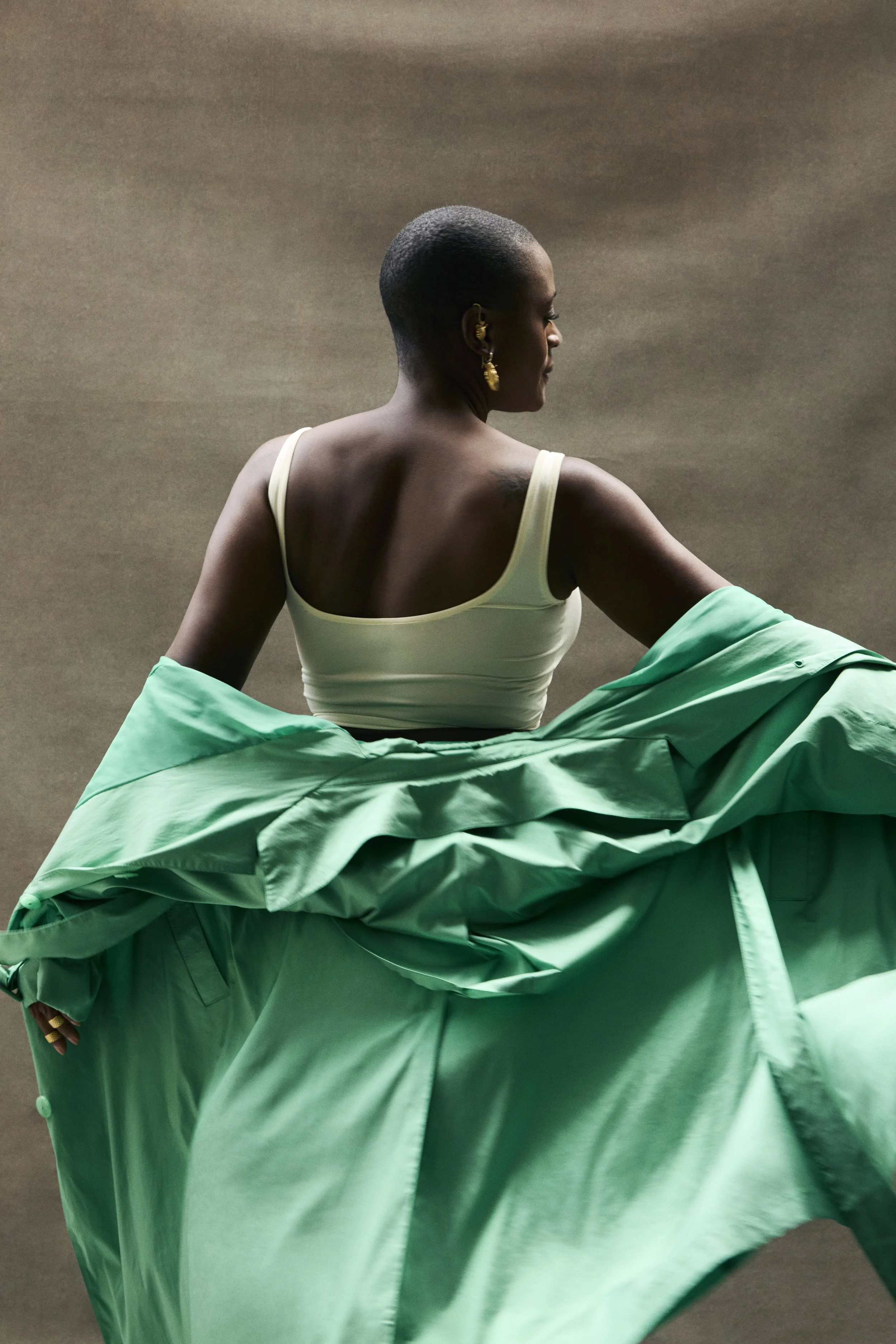
Corset VIVIENNE WESTWOOD, trench CONTEMPORARY WARDROBE.
“ IT’S NOT ABOUT CONTROL. IT’S ABOUT BIRTH, GIVING, BEING, AND HAVING THE FREEDOM TO LET GO. ”
— T’NIA MILLER ON JOCASTA IN VISIONQUEST
CA __ When you were talking about Jocasta playing with Ultron, asking, "Am I going to kill him now or play with him and toy with him a little later?" It's almost like a black widow experience.
TM __ Exactly! It's so funny you picked that up because that's exactly what I thought when I read her. I was like, "Oh, she's a black widow." [laughs] She's a black widow. I'm going to get exactly what I need from you. She's dominating the patriarchy. She's taking the patriarchy and making it her own.
CA __ Another theme I've noticed in this series is reclamation and retribution. In episode four, Jocasta says, "I'm not here for her. I'm here for what you stole from me." It reminded me of Henrietta Lacks here in the United States, and the parallel legacy in the UK of using DNA and biological samples from Caribbean immigrant women for genetic research without their knowledge or permission. Can you talk to me about Black women reclaiming ownership of themselves, their bodies physically, their personhood spiritually and holistically? I think that's something a lot of people actually miss when looking at this series.
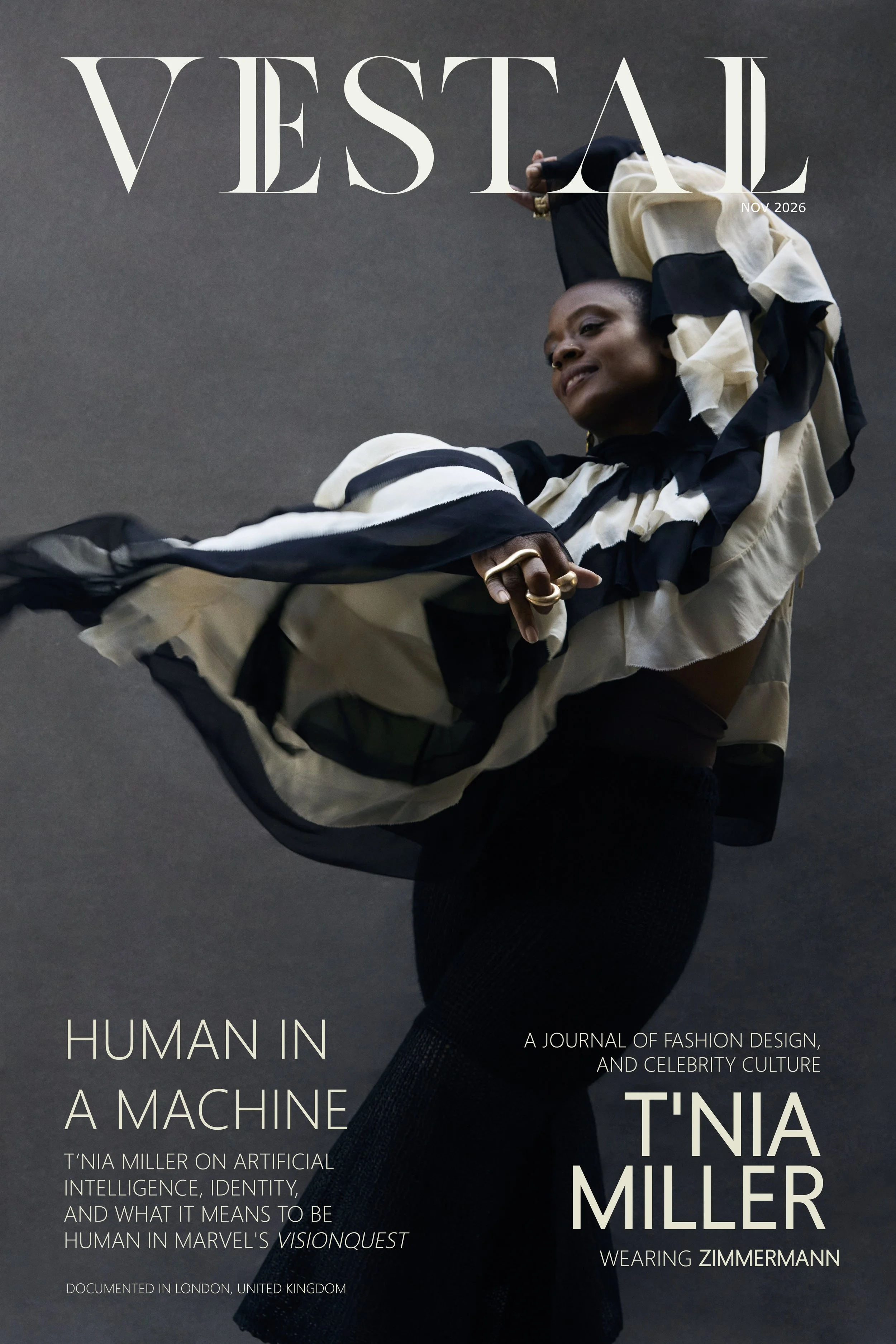
Total look ZIMMERMANN.
TM __ Everybody in this series is reclaiming something, finding out who they are. Everyone's searching for identity. In terms of Black women reclaiming spaces, reclaiming themselves, reclaiming their identity, being seen and saying, "Hi, I'm here." And now celebrating Black women. I'm not sure Jocasta is doing that. That doesn't show up so much in terms of her celebrating her Blackness. For her, it's not that. It's about saving humanity. But as T'Nia, as a Black woman who gets to play that role, to have been given such a beautiful role, to have that screen time, and to inspire those younger ones who are coming along, I think about the amount of space Black women are now taking up on screen. The number of women who now have their hair short, this has been twenty years for me. It's about accepting ourselves, our hair, and our culture, and having that celebrated not just amongst ourselves, but outside our communities as well, in publications such as yours. There was a time when that didn't happen. I think we're not only celebrating ourselves, but we're we're celebrating through our achievements, our clothes, our food, and our lifestyles. We're being seen a lot more. We've come a long way. There's still a long way to go, and we need to be careful because we're seeing certain states in America and certain places in Europe becoming far more right-wing and conservative. So I think we do need to look sharp about that. But there is beauty in social media. There's a beauty in our intersections, and that's what's happening. We're noticing that our intersections are closer than we thought. And that allows us to be present and to be seen.
CA __ I love that. I'm speaking with Jocasta, Dr. Josephine Carrington, and T'Nia, and I love that we got to hear that part of you. When I first saw you years ago, with your short hair, you reminded me of Cicely Tyson in her book Just as I Am. The story behind that, and everything you've just said, brings it full circle for me. But staying with the themes of the series, there's another theme, not about people, but about birds. I think some people missed that, too. Can you talk about it?
TM __ She has that bit of a speech where she talks about birds. The writers nod to Poe. She says: "Crows and ravens, they peck at the dead to gut every morsel from the bone. But starlings, nightingales, together they move in one graceful form without thinking. They're symbiotic." I think she's talking about spirituality. She's talking about this telepathy, where they move together for the greater good, and it's not about the individual. This is about the collective, the collective good. So she's saying, look to nature. Look to the birds. Let that be our shining example. And in that, we will soar. It's quite poetic. The whole thing is poetic.
CA __ I think everything she does has some kind of dance to it. You do physically dance, but there's always that poetic stream of consciousness, where things are linked and interplay with one another. I was blown away by the whole birds’ theme. First, you have the reference to Edgar Allan Poe's The Raven. One of the earliest poems I learned as a kid. I was going line by line with it. Then you bring in starlings, and I love The Silence of the Lambs. In my mind, everything is connected. Even outside of Jocasta, Ultron dips into the bird theme. He strategically uses a robotic pigeon to cause harm to Vision. I won't give away any spoilers, though. But coming back to Jocasta, Dr. Josephine Carrington, and T'Nia, and you have to say the whole name, we've talked about the overall MCU. When we watch Marvel films, we often find ourselves having this internal discussion about what separates heroes from villains. When you look at Jocasta, do you see her as a hero, an antagonist, or someone for whom those labels are simply too simplistic?
TM __ I think it's that. I think she's all those things. She's a hero, she's a villain, she's an antagonist. But ultimately, I think she's a hero. People are like, "Oh my God, they need to take her out," because they haven't seen all the episodes yet. But I think ultimately her heart is in the right place. She has good intentions, even if that means wiping out all of humanity so the world can survive.
CA __ That sounds like a God complex, similar to what got Ultron locked away. Her husband, boyfriend, dance partner...
TM __ It runs in the family! [laughs]
CA __ It also raises the question: her methods are questionable to an extent, but is it a case of the end justifying the means?
TM __ For her, it definitely justifies the means. But it's not what Jo wanted. It wasn't Jo's idea. But Jo had a God complex as well. Doesn't every scientist and doctor, when we're trying to cure diseases and can't? Are they playing God? It depends on who you're asking.
CA __ That's very true. It's a matter of perspective.
TM __ It's a matter of perspective. She said, sitting on the fence! [laughs]
“ SHE’S TAKING THE PATRIARCHY AND MAKING IT HER OWN. ”
— T’NIA MILLER ON JOCASTA IN VISIONQUEST
CA __ So, with Jocasta, there's so much room for her. She's relatively new to the series and the film side of the MCU, but she's had a rather lengthy history in the comic book world. Are there any particular aspects of her comic book journey that you'd like to see explored in a TV series or film?
TM __ I think just her meeting some of the other characters in the MCU world and getting to play with them. I'd like to see elements from some of the comics come to life. That'd be super cool.
CA __ The reason I ask is that, if we stick with the idea of her as a hero in the MCU, you become, I think, the 23rd Black superhero in the MCU.
TM __ Is that right?
CA __ If we stick with the vision of her being a hero, yes. I think you become the 23rd. As of last year, there's room for growth and opportunity. I think there's a need for representation, and there's more storyline to explore, but also more lessons to be taught and learned.
TM __ And fun to be had!
CA __ What lessons have you learned from Jocasta? What was your biggest takeaway from playing her?
TM __ I think the world's been on fire these last couple of years, right? If you think about all the conflicts happening around the world, it's made me really angry. I'm spiritual. I believe in God, but I've been so hella mad with God these last few years. I was like, "What is the point of you? Seriously, what is the point of you if you can't stop all this madness that's going on? Where's the compassion? What does that word mean, humanity? The dictionary definition versus the example of what it actually means to be human." There was a disparity for me, and I think I went on that journey with Jocasta. I was literally going through that existential crisis myself, thinking about what was going on in the world. It's just like the world is bleeding, and my heart is bleeding. I'm so happy to be part of this project, and I'm having such a wonderful life. But then I look at the news, and I'm in fits of tears. And how lucky am I to just be in fits of tears rather than living the lives of so many people who are enduring conflict, famine, disease, torture. My takeaway is just that we both found peace in the hope of the tide shifting. It was something to go through that journey whilst playing her, because I think that helped. My takeaway is that humanity, humans, are worth saving. There's more good in this world than there is bad, so I don't know. Maybe that was an affirmation rather than a takeaway.
CA __ Affirmations. I'm here for it. [smiles]
Photography Billie Scheepers (The Visionaries), Stylist Zoe James, Interviewer Carl Ayers, Makeup Helen Asher, Production David Gargiulo & Dane Punch, Assistant Stylist Tilly Hopcraft Jones, Talent T’Nia Miller (Dane Punch PR), Documented in London, UK.
PROMOTION